


Skip to content
LACRIMAE RERVM Gallery

Exhibition · Supplementary material · Dossier de l’œuvre

The Mountain Mists

Herbert James Draper · 1912 · LR 9.14 · principal work of the exhibition What Song the Syrens Sang

Work · Opus

The Mountain Mists
View in the room
Date
Exhibited 1912 (Christie’s: ‘Painted circa 1912’)
Medium
Oil on canvas
Dimensions
216.2 × 118.1 cm (85⅛ × 46½ in., Christie’s, 2021)
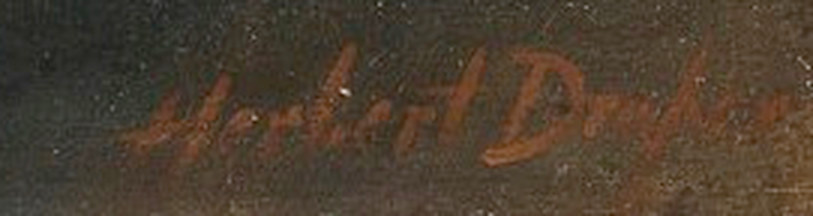
Signature
‘Herbert Draper’, lower right
Numbers
Royal Academy, 1912, no. 730; Toll, 2003, HJD160
Whereabouts
Private collection (last seen in public at Christie’s, New York, 13 October 2021, lot 7) · lot record

Royal Academy catalogue, 1912 · Catalogus

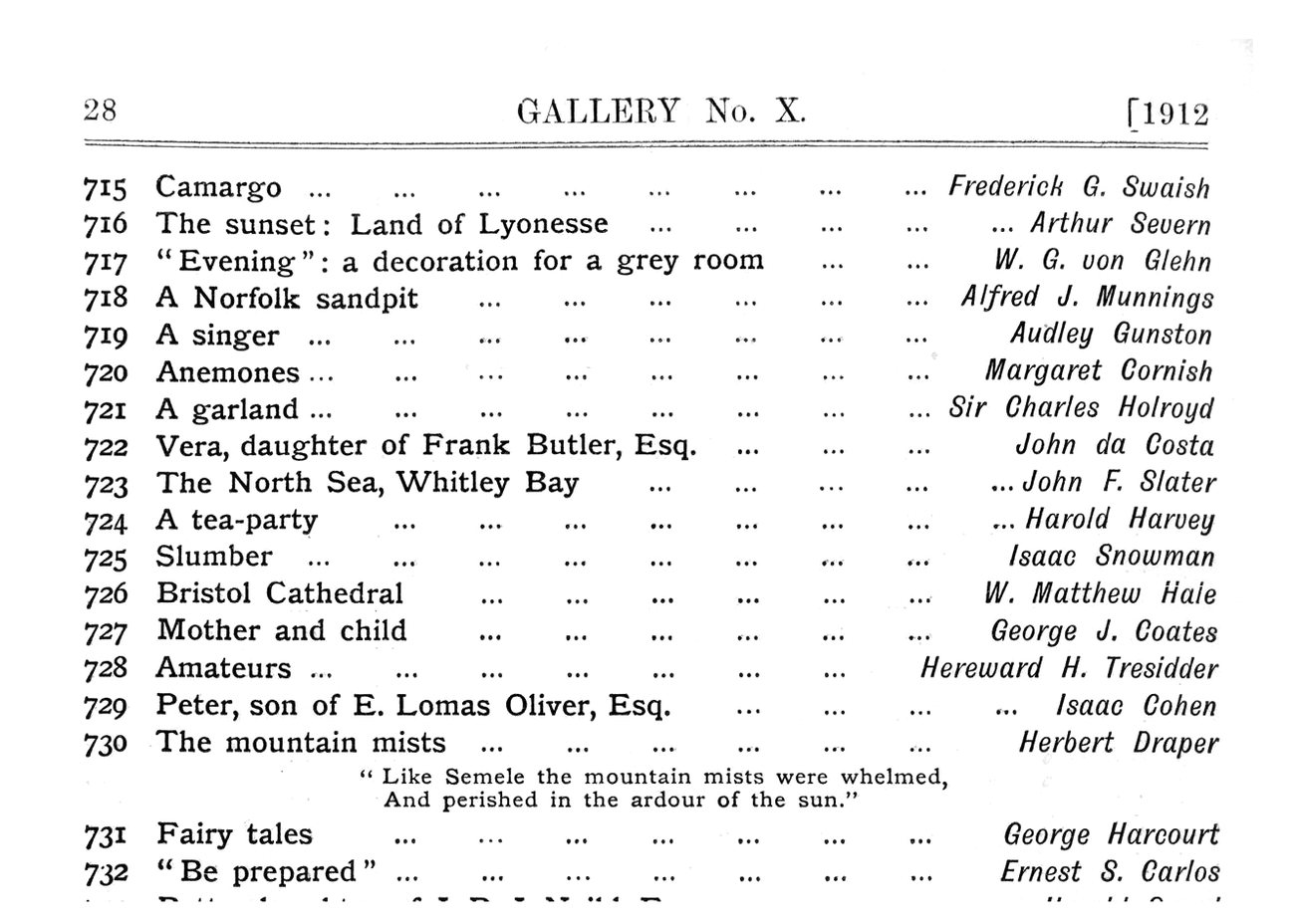
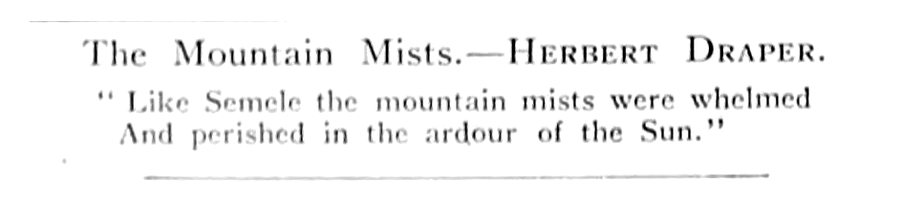
730 The mountain mists … Herbert Draper
“Like Semele the mountain mists were whelmed,
And perished in the ardour of the sun.”

The Exhibition of the Royal Academy of Arts, 1912. The One Hundred and Forty-fourth, p. 28, Gallery No. X, no. 730 · scan, Paul Mellon Centre
Catalogue of 1912, p. 28: no. 730, The mountain mists, Herbert Draper, with the couplet
Catalogue of 1912, p. 28. Scan: Paul Mellon Centre, CC BY-NC 4.0.

Beside it, and his address

729 Peter, son of E. Lomas Oliver, Esq. … Isaac Cohen
731 Fairy tales … George Harcourt

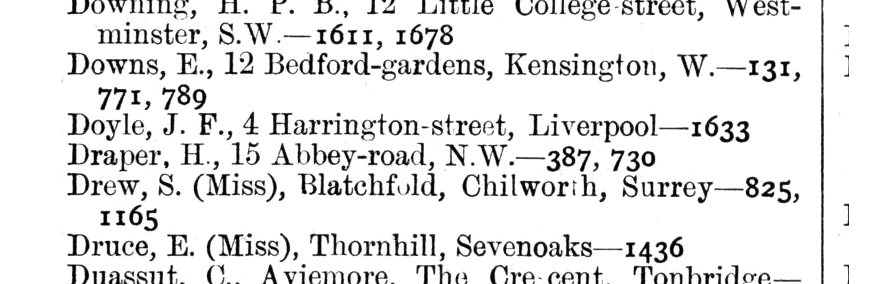
The same page

Draper, H., 15 Abbey-road, N.W.—387, 730

‘List of the Exhibitors’, in the same catalogue, p. 67 · scan, Paul Mellon CentreHe sent two works that year. No. 387, in Gallery No. VII, is ‘Miss Yvonne Herbert’.
List of the Exhibitors, 1912, p. 67: Draper, H., 15 Abbey-road, N.W., 387, 730
List of the Exhibitors, 1912, p. 67. Scan: Paul Mellon Centre, CC BY-NC 4.0.

Where it hung · Locus

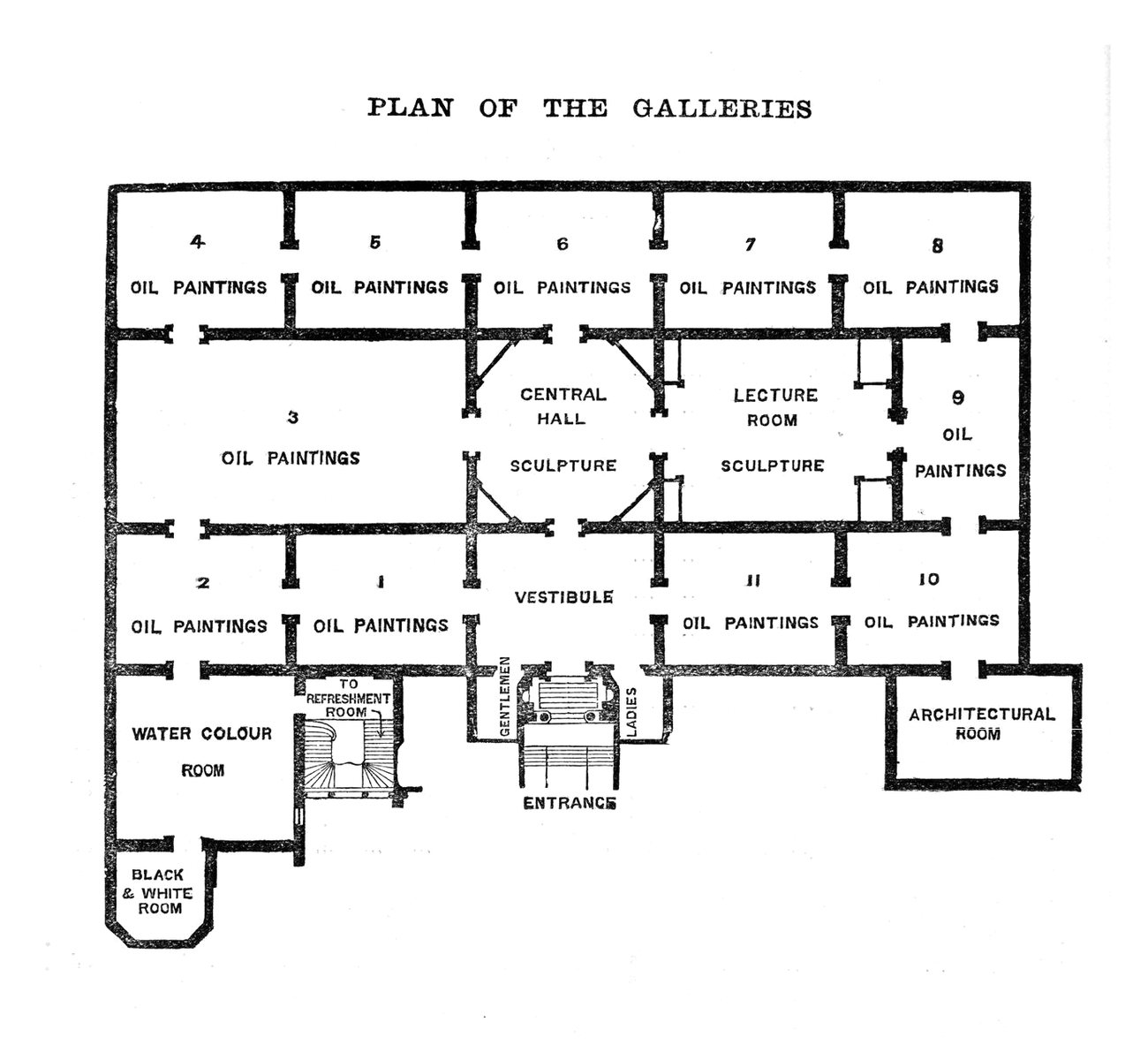
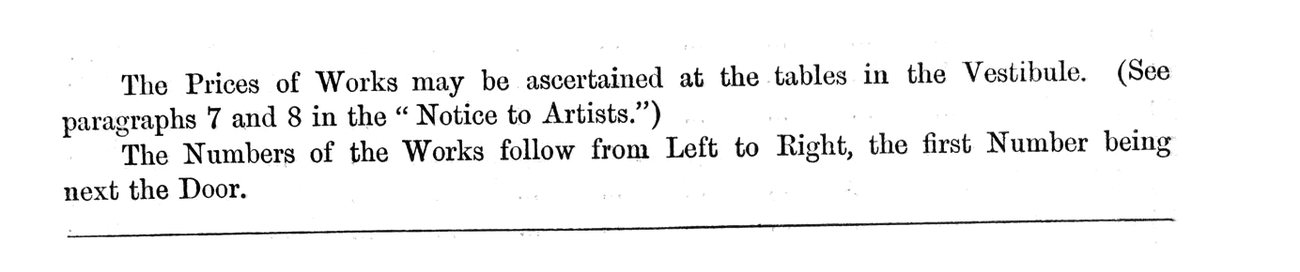
Gallery No. X, the last but one of the eleven numbered galleries of oil paintings, held nos. 688–751: sixty-four works. The catalogue states its rule for the walls on the first page of the list: ‘The Numbers of the Works follow from Left to Right, the first Number being next the Door.’

Plan of the galleries in the catalogue of 1912, with room 10 next to the Architectural Room
Plan of the galleries, catalogue of 1912. Room 10 lies next to the Architectural Room. Scan: Paul Mellon Centre, CC BY-NC 4.0.
Two notes at the head of the catalogue of 1912: prices at the tables in the Vestibule; numbers from left to right
Catalogue of 1912, p. 7. Scan: Paul Mellon Centre, CC BY-NC 4.0.

The artist’s form · Forma

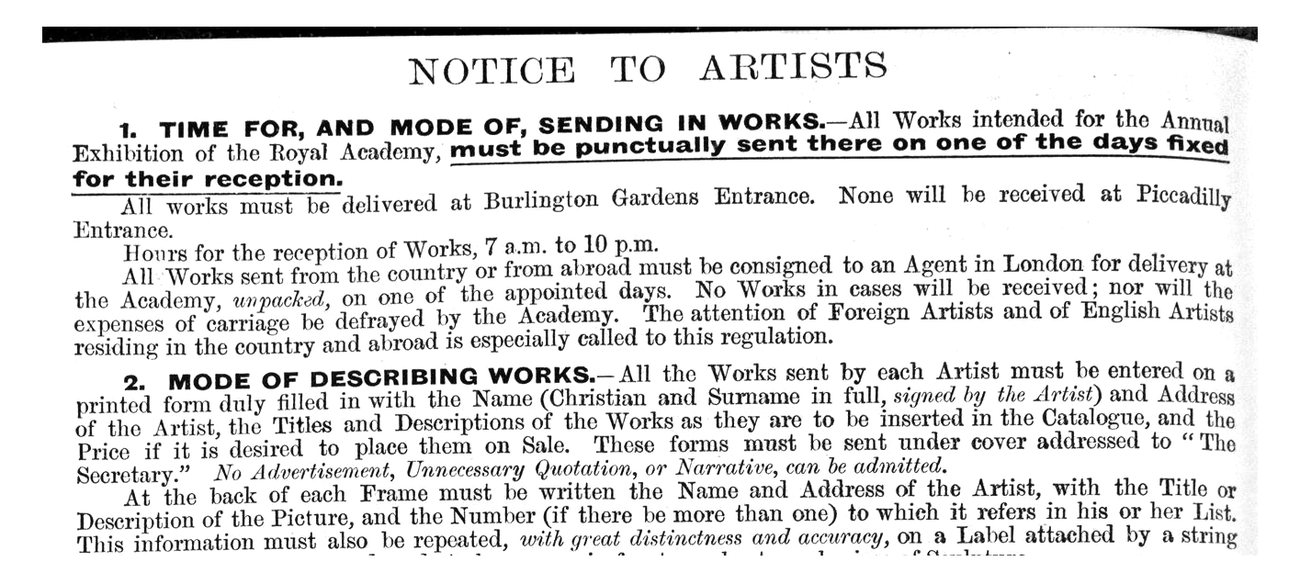
The ‘Notice to Artists’, printed in the catalogue of 1912 itself, says where the words of an entry came from. Each exhibitor entered his works on a printed form that he signed, giving ‘the Titles and Descriptions of the Works as they are to be inserted in the Catalogue’. By that rule title and couplet reached the printer over Draper’s signature, whoever wrote the lines.

The rule was in force when the form was filled in: the catalogue of 1911 prints the Notice in the same words. The same clause shut out ‘Unnecessary Quotation’. It stands in the catalogue of 1906 as well, so the couplet of 1912 and the lines of 1906 both passed it.

All the Works sent by each Artist must be entered on a printed form duly filled in with the Name (Christian and Surname in full, signed by the Artist) and Address of the Artist, the Titles and Descriptions of the Works as they are to be inserted in the Catalogue, and the Price if it is desired to place them on Sale. These forms must be sent under cover addressed to “The Secretary.” No Advertisement, Unnecessary Quotation, or Narrative, can be admitted.

‘Notice to Artists’, clause 2, in The Exhibition of the Royal Academy of Arts, 1912. The One Hundred and Forty-fourth, front matter · scan, Paul Mellon Centre
The Notice to Artists in the catalogue of 1912, with clause 2 open
Notice to Artists, clause 2. Scan: Paul Mellon Centre, CC BY-NC 4.0.
Clause 7 of the Notice to Artists: Sale of Works
Notice to Artists, clause 7. Scan: Paul Mellon Centre, CC BY-NC 4.0.

Two more clauses point to records that may survive. The back of every frame had to carry ‘the Name and Address of the Artist, with the Title or Description of the Picture’. And under ‘Sale of Works’ prices went into Price Catalogues kept in the galleries: ‘All purchases will be registered’. Neither the form, nor the frame, nor any such entry for no. 730 has been seen for this dossier.

The couplet · Distichon

The catalogue printed two lines beneath the title, in quotation marks and with no author’s name. They were printed again in May 1912 in the Pall Mall Magazine Extra, the only other printing found from the painter’s lifetime.

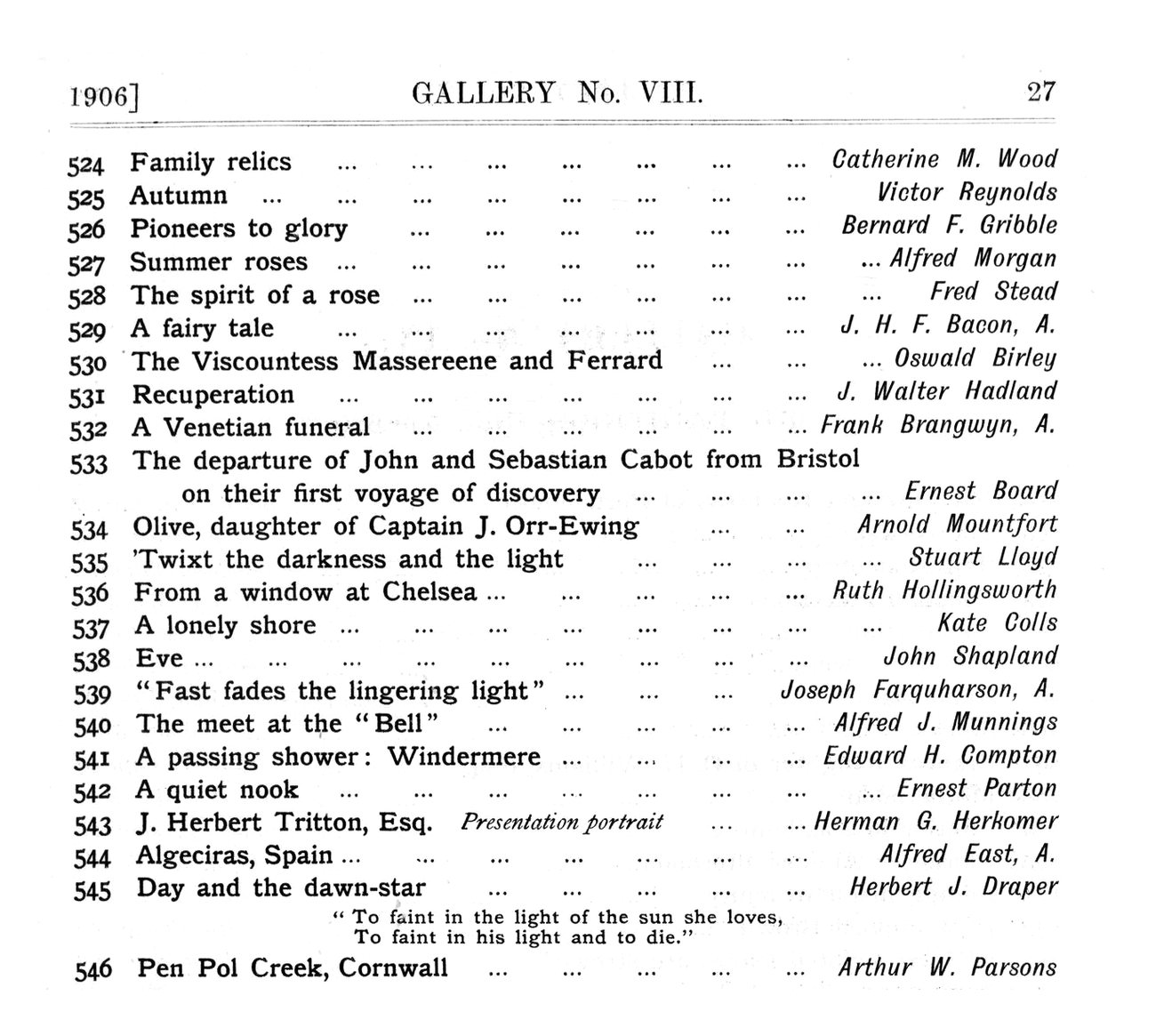
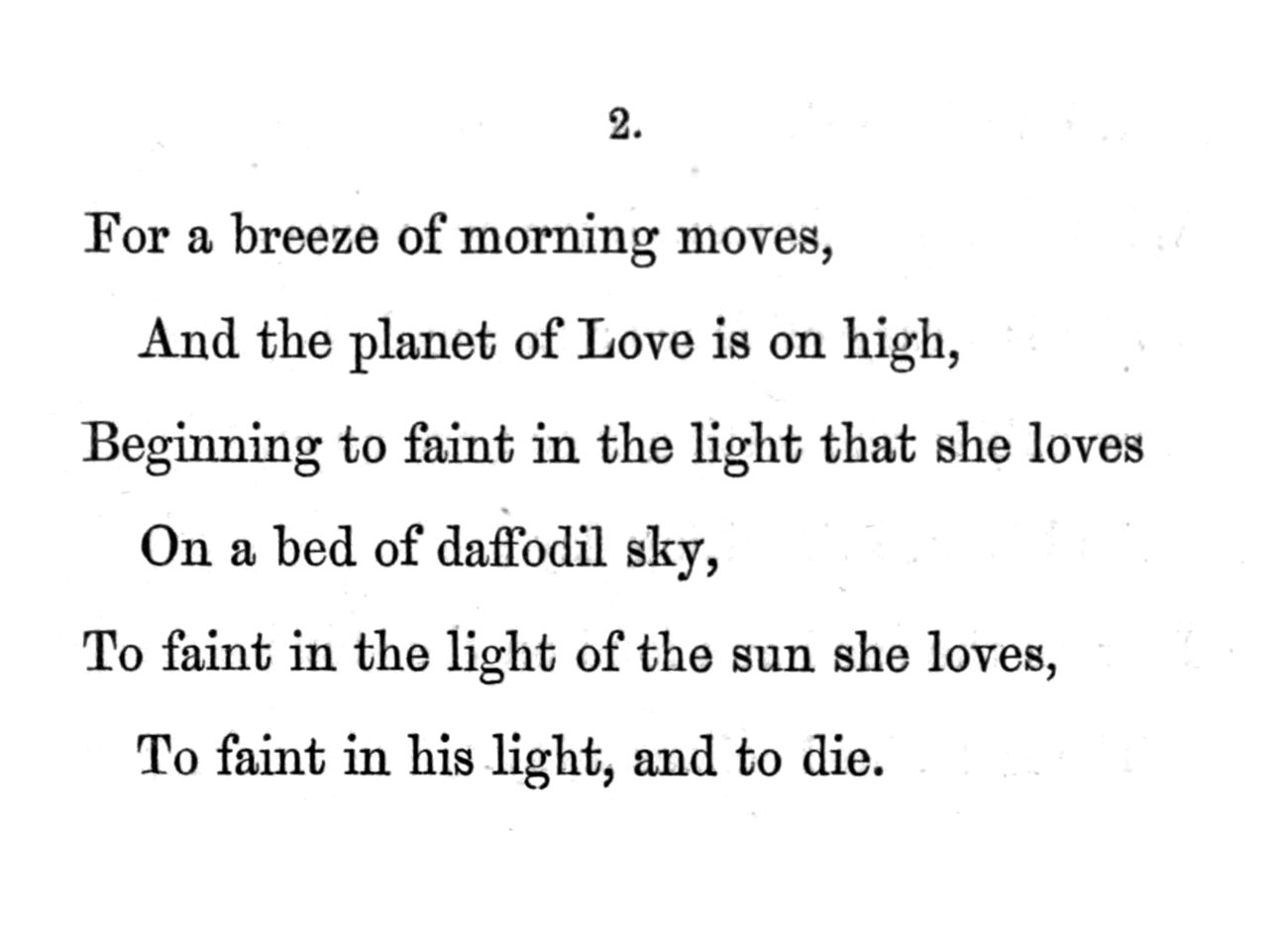
The silence of the catalogue settles nothing, as the case of 1906 shows. Under no. 545, Day and the dawn-star, two lines were printed in just the same way, again with no name. The sale note of 2021 takes them for the painter’s own (‘Draper described the Dawnstar’s fate’). They close the second stanza of section XXI of Tennyson’s Maud as first printed in 1855, where the second line has a comma after ‘light’.

545 Day and the dawn-star … Herbert J. Draper
“To faint in the light of the sun she loves,
To faint in his light and to die.”

The Exhibition of the Royal Academy of Arts, 1906, p. 27, Gallery No. VIII, no. 545 · scan, Paul Mellon Centre
Catalogue of 1906, p. 27: no. 545 with two lines and no author’s name
Catalogue of 1906, p. 27. Scan: Paul Mellon Centre, CC BY-NC 4.0.

For a breeze of morning moves,
And the planet of Love is on high,
Beginning to faint in the light that she loves
On a bed of daffodil sky,
To faint in the light of the sun she loves,
To faint in his light, and to die.

A. Tennyson, Maud, and Other Poems (London: Edward Moxon, 1855), p. 67, section XXI, stanza 2; section XXII of Part I in later editions · scan
Tennyson, Maud, 1855, p. 67: the stanza ending with the two lines of 1906
Tennyson, Maud, 1855, p. 67.
Printing Text Difference
Royal Academy catalogue, 1912, p. 28 “Like Semele the mountain mists were whelmed,
And perished in the ardour of the sun.”
The earliest text
Pall Mall Magazine Extra, May 1912, p. 52 “Like Semele the mountain mists were whelmed
And perished in the ardour of the Sun.”
No comma after ‘whelmed’; ‘Sun’ with a capital
Christie’s, lot essay, 2021 ‘Like Semele the mountain mists were whelmed/And perished in the ardor of the sun’ American ‘ardor’; given as the Academy’s text
Caption in the Pall Mall Magazine Extra: The Mountain Mists, Herbert Draper, with the couplet
Pictures of 1912: Pall Mall Magazine Extra, p. 52, the caption.

Searches of the Internet Archive’s full text and of the open web, for both lines and for parts of them, found only the printings above. The lines may be Draper’s, or they may come from a text that such a search cannot reach; nothing found decides between the two.

Pall Mall Magazine Extra, scan

Its names · Nomina

Every name under which the picture has been found in print, in order. Where the page itself was not seen, the note says so.

  1. 1912The mountain mists · Royal Academy catalogue, no. 730The name on the artist’s form, if the rule was kept.
  2. May 1912The Mountain Mists · Pall Mall Magazine Extra, p. 52
  3. May 1912Mountain Mists · The Saturday Review and The Spectator; The Mountain Mists · The Chemist and Druggist
  4. 1912Clyties of the Mist · Royal Academy Pictures and Sculpture 1912 (Cassell), p. 43 and indexThe only name in this volume; no comment is printed.
  5. November 1912The Mountain Mists · Autotype Fine Art Company, in The Illustrated London News
  6. 1950Nymphs · Christie’s, London, 17 November, part of lot 42Known from the provenance printed in 2021; the catalogue of 1950 has not been seen.
  7. 1986The Mountain Mists (ca. 1912) · B. Dijkstra, Idols of PerversitySeen in search extracts only.
  8. 2000Clyties of the Mist · Christie’sFrom a search extract of a Christie’s announcement of that period, in a book not open to reading; the page has not been seen.
  9. 2018Clyties of the Mist 1912 · Chiswick Auctions, 20 March, lot 88 (studies)
  10. 2021The Mountain Mists · Christie’s, New York, 13 October, lot 7The lot essay: ‘sometimes also called Clyties of the Mist’.
  11. 2022The Mountain Mists · Bonhams, London, 30 March, lot 61 (the oil sketch)Inscribed on the reverse of the sketch: ‘The MOUNTAIN MISTS/Sketch for the large picture’. In whose hand, and when, is not stated.
Caption in Cassell’s volume: Clyties of the Mist, Herbert Draper, with the figures 84 × 46
Royal Academy Pictures and Sculpture 1912, p. 43, the caption.
Index line in Cassell’s volume: Draper, Herbert, Clyties of the Mist, 43
The same volume, the index.

The Academy’s rule makes the first name the artist’s. Where the second came from is not known. Cassell’s volume gives it with no comment, and in 2021 Christie’s says only that the work is ‘sometimes also called’ by it.

Royal Academy Pictures and Sculpture 1912, scan

Notices of 1912 · Testimonia prima

None of these three stands in the list of literature printed by Christie’s in 2021. The notices that list does name are set down under Literature, with those that could not be read marked.

4 May 1912

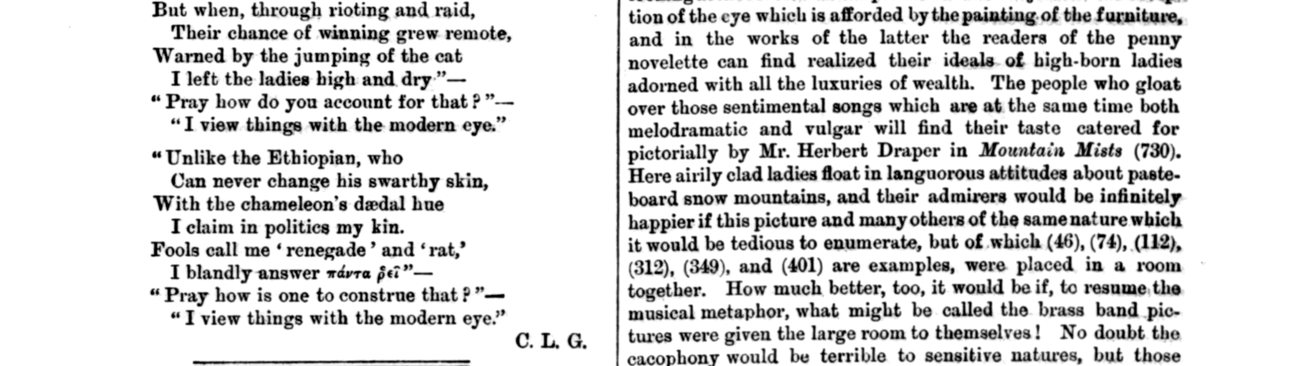
It doesn’t matter where you look or what you take; your own conception of a given subject is finer than the picture’s. “Mountain Mists”, for instance; who that has ever climbed, or even looked with wonder at, mountains would conceive of Nature’s elemental mystery and rhythm in the terms Mr. Draper employs in No. 730? Who would ever dream of associating his ultra-massaged and “complexioned” wax dummies with the spirit of out-of-doors? None, and we all know it, but yet support as great institutions, socially and artistically, the corporations that encourage these pitiful falsehoods.

C. H. Collins Baker, ‘The Royal Academy’, The Saturday Review, 4 May 1912, pp. 549–550; the passage on p. 550 · scan

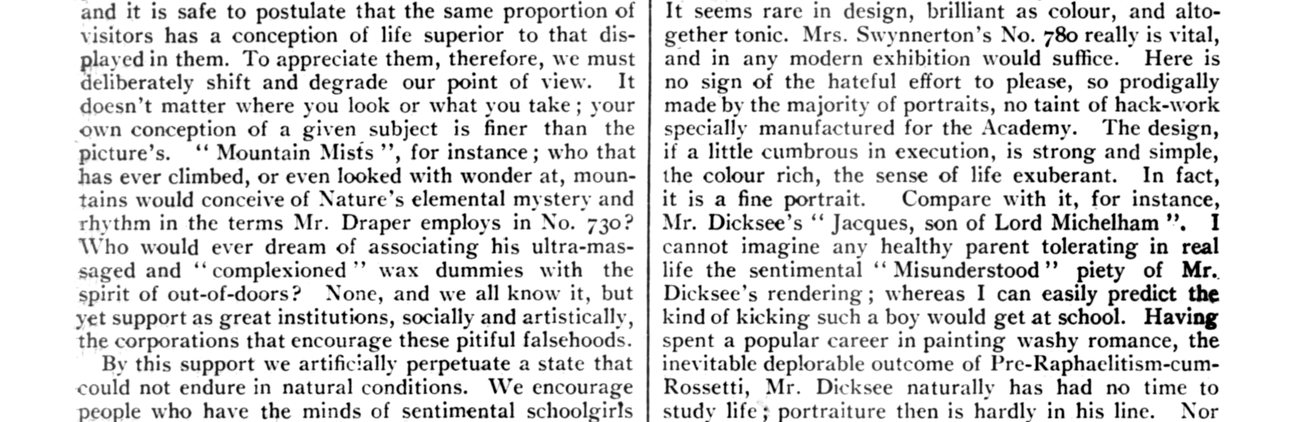
Running head: The Saturday Review, 4 May 1912, p. 550
The Saturday Review, 4 May 1912, p. 550, with the passage on no. 730 open
The Saturday Review, 4 May 1912, p. 550.

4 May 1912

The people who gloat over those sentimental songs which are at the same time both melodramatic and vulgar will find their taste catered for pictorially by Mr. Herbert Draper in Mountain Mists (730). Here airily clad ladies float in languorous attitudes about pasteboard snow mountains, and their admirers would be infinitely happier if this picture and many others of the same nature which it would be tedious to enumerate, but of which (46), (74), (112), (312), (349), and (401) are examples, were placed in a room together.

H. S., ‘Art. The Academy. I.’, The Spectator, 4 May 1912, pp. 715–716; the passage on p. 715 · scanThe numbers, by the catalogue: 46 A nymph (Frank Dicksee, R.A.); 74 “Welcome, sweet May” (Savage Cooper); 112 Columbina (Giuseppe Giusti); 312 The lure of the north (Arthur Wardle); 349 Death’s arrest (J. H. Amschewitz); 401 The daughters of W. G. Player, Esq. (Frank O. Salisbury). On p. 716 the same writer on no. 151, by Adrian Stokes: “It is not only the fine drawing and colour of An Autumn Evening in the Alps (151), but the feeling of the personality and loneliness of great snow mountains, which makes this picture delightful.” The notice prints initials only; they fit Henry Strachey (1863–1940), recorded as the paper’s art critic from 1896 to 1922.

Running head: The Spectator, 4 May 1912, p. 715
The Spectator, 4 May 1912, p. 715, with the passage on no. 730 open
The Spectator, 4 May 1912, p. 715.

18 May 1912

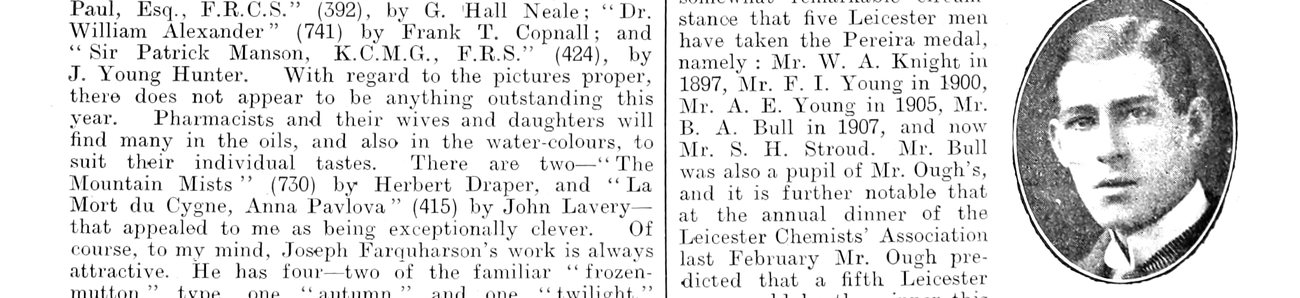
With regard to the pictures proper, there does not appear to be anything outstanding this year. Pharmacists and their wives and daughters will find many in the oils, and also in the water-colours, to suit their individual tastes. There are two—“The Mountain Mists” (730) by Herbert Draper, and “La Mort du Cygne, Anna Pavlova” (415) by John Lavery—that appealed to me as being exceptionally clever.

‘The Picture Show’, unsigned, The Chemist and Druggist, 18 May 1912, p. 104 · scan

Running head: The Chemist and Druggist, 18 May 1912, p. 104
The Chemist and Druggist, 18 May 1912, p. 104, with the passage open
The Chemist and Druggist, 18 May 1912, p. 104.

The reproduction · Typi

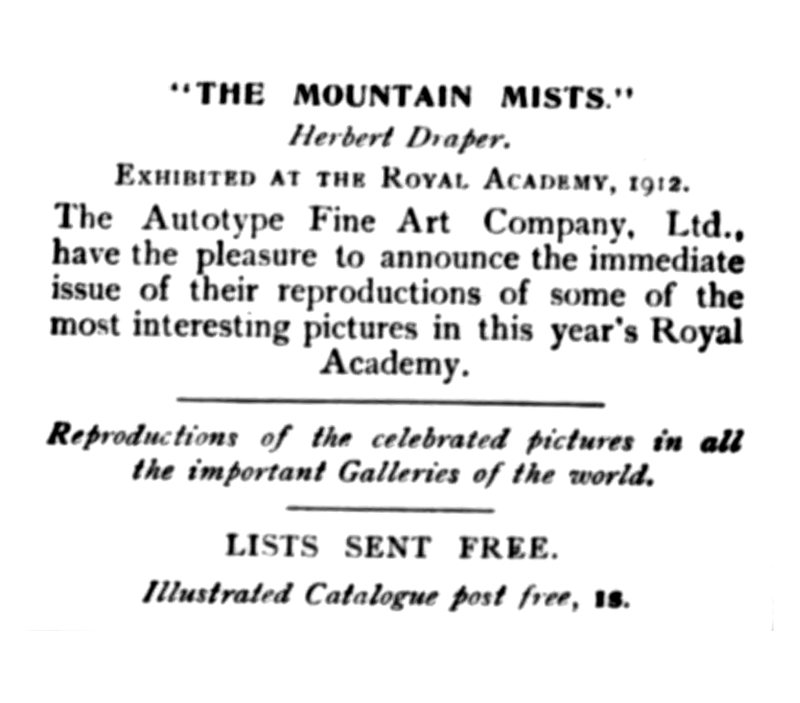
On 9 November 1912 The Illustrated London News carried, among its ‘Publishers’ Announcements’, an advertisement of the Autotype Fine Art Company, 74 New Oxford Street. This is the one picture it names, with the painter and the exhibition, and it announces the ‘immediate issue’ of the firm’s reproductions from that year’s Academy. A full-text search finds the wording in this number only.

No impression has been found, and neither its size nor its process is known.

“The Mountain Mists.” Herbert Draper. Exhibited at the Royal Academy, 1912. The Autotype Fine Art Company, Ltd., have the pleasure to announce the immediate issue of their reproductions of some of the most interesting pictures in this year’s Royal Academy.

The Illustrated London News, 9 November 1912, p. 696 · scan
Running head: The Illustrated London News, Nov. 9, 1912, 696
The running head of the page.
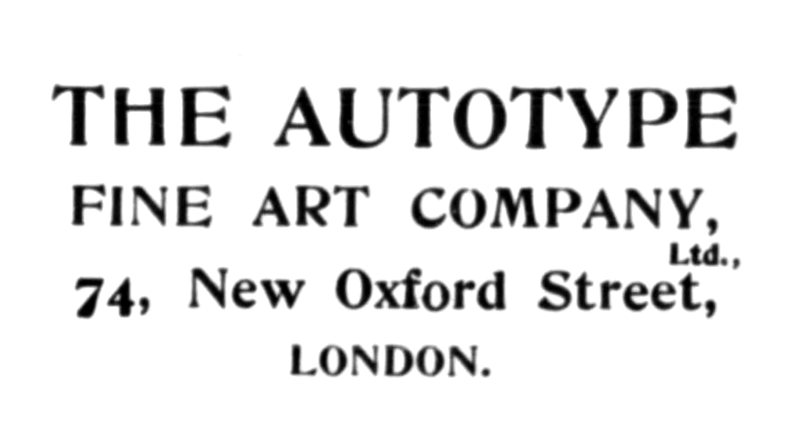
Heading of the advertisement: The Autotype Fine Art Company, Ltd., 74, New Oxford Street, London
The heading of the advertisement.
Text of the Autotype advertisement: The Mountain Mists, Herbert Draper, Exhibited at the Royal Academy, 1912
The text of the advertisement.

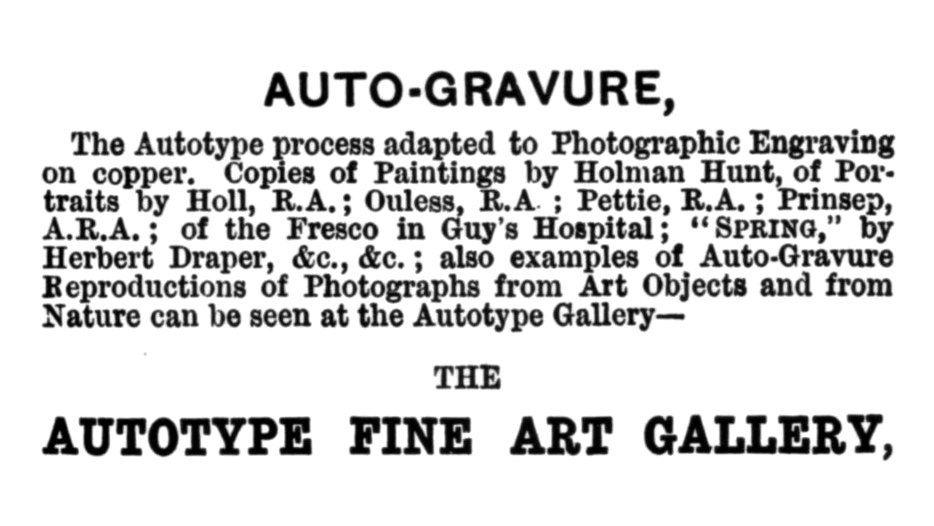
The Autotype process adapted to Photographic Engraving on copper. Copies of Paintings by Holman Hunt, of Portraits by Holl, R.A.; Ouless, R.A.; Pettie, R.A.; Prinsep, A.R.A.; of the Fresco in Guy’s Hospital; “Spring,” by Herbert Draper, &c., &c.

Autotype’s ‘Auto-Gravure’ notice, The Academy, no. 937, 19 April 1890, p. 276 · scanTwenty-two years earlier ‘Spring’ already stands among the copies the firm names.
Autotype notice of 1890 naming Spring by Herbert Draper
The Academy, 19 April 1890, p. 276.

Dating · Chronologia

Christie’s dates the painting ‘circa 1912’. The printed record gives the firm limit: it hung at the Royal Academy that summer as no. 730, and the Notice to Artists shut out ‘Works which have been already publicly exhibited in London’, so by that rule this was its first showing in the city.

The forms on which titles were entered could be had, says the Notice, ‘during the month of March only’. An earlier limit may stand in M. H. Spielmann’s article of 2 April 1912, ‘The R.A., Some Pictures That Will Be Seen’, listed by Christie’s; it could not be read for this dossier.

A sheet sold at Chiswick in 2018 joins studies for this picture and for The Kelpie: the sale catalogue dates them 1912 and 1913. The Kelpie was shown at the Academy in 1913.

Notice to Artists, clauses 2 and 5, catalogue of 1912

Canvas and hand · Materia et manus

Medium
Oil on canvas (Christie’s, 2021)
Dimensions
216.2 × 118.1 cm (85⅛ × 46½ in., Christie’s, 2021)
Printed in 1912
84 × 46, beside the caption in Cassell’s volume (in inches, to judge by the canvas: 213.4 × 116.8 cm; the volume does not say how it was measured)
Signature
‘Herbert Draper’, lower right, in red-brown
Inscribed
None recorded on the canvas. No source describes its reverse or the frame.

The plate of May 1912 against the canvas

The half-tone in the Pall Mall Magazine Extra was scaled and laid over the present photograph of the canvas, and the fit measured by correlation. At the best fit (0.92) the plate takes a scale of 0.99 in width and 0.98 in height, and its edges meet those of the canvas to within 1–2 per cent. Height to width, the plate gives 1.85, the photograph 1.84, Christie’s measurements 1.83.

Nothing here suggests that the canvas has been cut or extended since May 1912, though a half-tone cannot prove it to the last centimetre. The plate in Cassell’s volume was not used: its proportions, 1.73, show that the printer cropped it.

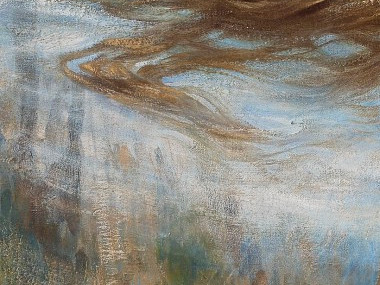
Long hair drawn out over snow and ice, left of the canvas
Left, below the peaks: hair drawn out over the snow.
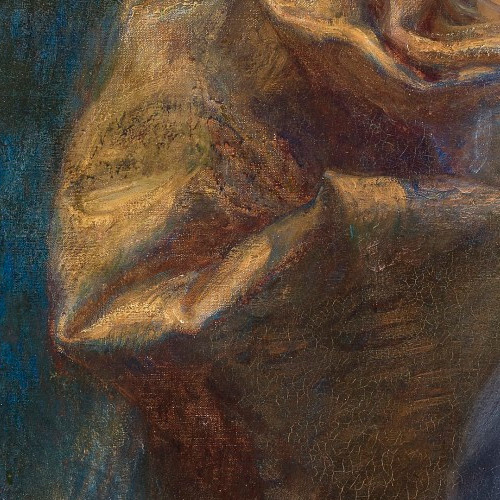
Folds of bronze and gold drapery on a blue-green ground, left of centre
Left of centre: the drapery, bronze over blue-green.
The signature Herbert Draper in red-brown paint on a dark ground
Lower right: the signature, enlarged and lightened.

Christie’s, New York, 13 October 2021, lot 7

Provenance · Provenientia

  1. after 1912?Sir Robert Ropner, Bt. (1838–1924), Skutterskelfe Hall, Hutton Rudby, YorkshireChristie’s: ‘probably acquired directly from the artist’. No record of the purchase has been found. Christie’s recorded in 2003 that he bought the Academy picture of 1906. The family bought Skutterskelfe in 1898. Sir Robert died on 26 February 1924; the hall went to his son Sir John Henry Ropner, 2nd Bt. (1860–1936).
  2. 17 November 1950Christie’s, London, part of lot 42 (two works), as NymphsChristie’s calls this ‘His estate sale’, but Sir Robert had been dead for twenty-six years. The Ropners owned Skutterskelfe until 1950, when ‘the estate was offered for sale in lots’. Who consigned the picture is not established; the 3rd Baronet, Sir Emil (1893–1962), was then living. The catalogue of 1950 has not been seen.
  3. 1950Bagnel, at that saleThe name as Christie’s prints it. Not identified.
  4. by 1983?Nick Mathews (d. 1983) and Mary Mathews (1916–1998), Yorktown, VirginiaThe keepers of Nick’s Seafood Pavilion, 324 Water Street; their house was at 105 Martiau Street. The Daily Press of Newport News reports her death at 82 and a second will; the articles that could be read do not name the picture. How it came from London, and whether it hung in the restaurant or the house, is not established.
  5. 6 February 2000Her estate sale: Kemp’s Antiques, Grafton, VirginiaThe Daily Press article ‘The Treasures Of Miss Mary’, 28 November 1998, is known by its title and web address only.
  6. 30 November 2000Anonymous sale: Christie’s, London, lot 21Bought there by the owner who sold it in 2021.
  7. 13 October 2021Christie’s, New York, lot 7, ‘Property from an American collection’
  8. NowPrivate collection
Christie’s record verbatim

Sir Robert Ropner, Bt. (1828-1934), Skutterskelfe Hall, Hutton Rudby, Yorkshire, probably acquired directly from the artist. His estate sale; Christie’s, London, 17 November 1950, part of lot 42 (comprised of two works), as Nymphs. Bagnel, acquired at the above sale. Nick Mathews (d. 1983) and Mary Mathews (1916-1998), Yorktown, VA. Her estate sale; Kemp’s Antiques, Grafton, VA, 6 February 2000. Anonymous sale; Christie’s, London, 30 November 2000, lot 21. Acquired at the above sale by the present owner.

Christie’s, 2021 · Yorkshire Gardens Trust, Skutterskelfe Park · Robert Ropner · Daily Press: 1.10.1998, 19.11.1998, 14.08.2000

Exhibitions · Expositiones 1

  1. 1912London, Royal Academy of Arts. The Exhibition of the Royal Academy of Arts, 1912. The One Hundred and Forty-fourth, Gallery No. X, no. 730

The only exhibition recorded by Christie’s; the Academy’s Notice admitted no work already shown in London.

Literature · Bibliographia 17

  1. 1912 *M. H. Spielmann, ‘The R.A., Some Pictures That Will Be Seen’, The Daily News (London), 2 April 1912, p. 4
  2. 1912C. H. Collins Baker, ‘The Royal Academy’, The Saturday Review, 4 May 1912, pp. 549–550
  3. 1912H. S., ‘Art. The Academy. I.’, The Spectator, 4 May 1912, pp. 715–716
  4. 1912 *‘The Royal Academy, Incident Pictures and Landscape’, The Scotsman (Edinburgh), 7 May 1912, p. 5
  5. 1912 *The Sketch: A Journal of Art and Actuality, Supplement, 8 May 1912, illustrated, p. 5
  6. 1912‘The Picture Show’, The Chemist and Druggist, 18 May 1912, p. 104
  7. 1912Pictures of 1912: Pall Mall Magazine Extra, May 1912, illustrated, p. 52
  8. 1912Royal Academy Pictures and Sculpture 1912 (London: Cassell), illustrated, as Clyties of the Mist, p. 43
  9. 1912Autotype Fine Art Company, advertisement, The Illustrated London News, 9 November 1912, illustrated, p. 696
  10. 1986 *B. Dijkstra, Idols of Perversity: Fantasies of Feminine Evil in Fin-de-Siècle Culture (Oxford), illustrated, pp. 127–128
  11. 2000 *C. Smith, ‘Victorian Olympians’, Christie’s Magazine, September–October 2000, illustrated, pp. 94, 97
  12. 2002 *E. L. Smith, Evelyn Pickering De Morgan and the Allegorical Body (Madison, NJ), p. 164
  13. 2003 *S. Toll, Herbert Draper, 1863–1920: A Life Study (Woodbridge), no. HJD160, pl. 38, pp. 42, 149–151, 196 catalogue raisonné
  14. 2003Christie’s, London, 25 November 2003, lot 153, lot essay, on Day and the Dawnstar
  15. 2007Christie’s, London, 28 February 2007, lot 6, lot essay, on the studies for The Kelpie
  16. 2021Christie’s, New York, 13 October 2021, lot 7, lot essay
  17. 2022Bonhams, London, 30 March 2022, lot 61, note on the sketch

An asterisk marks what could not be read for this dossier: those entries follow the list printed by Christie’s in 2021. The rest were read in scans of the first printing or, for the sales, on the lot pages.

Related works · Opera cognata

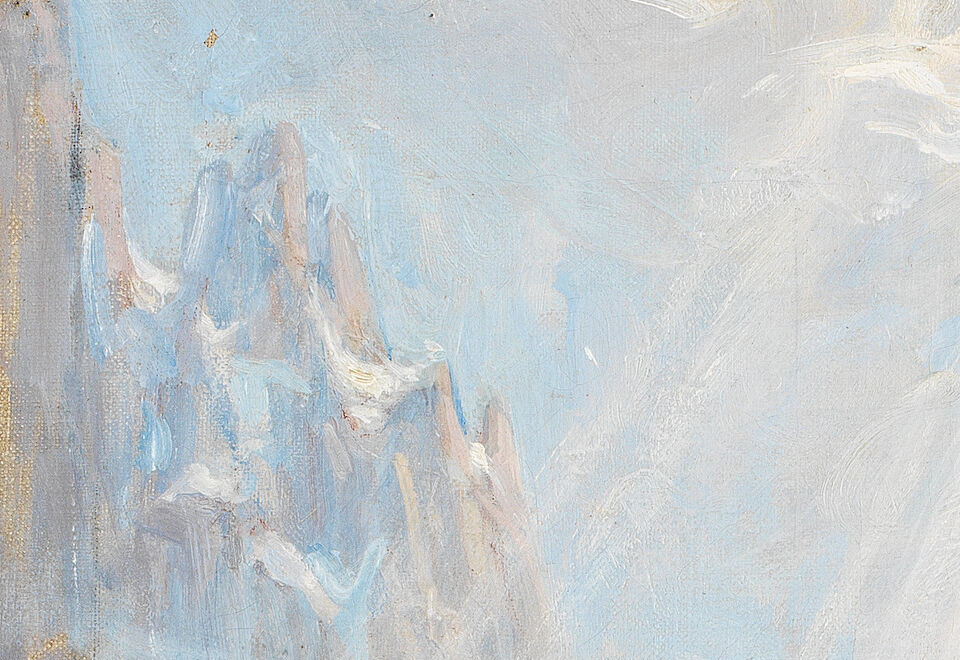
  1. The Mountain Mists: sketch, Bonhams 2022, lot 61

    Bonhams 2022, lot 61

    The Mountain Mists: sketch

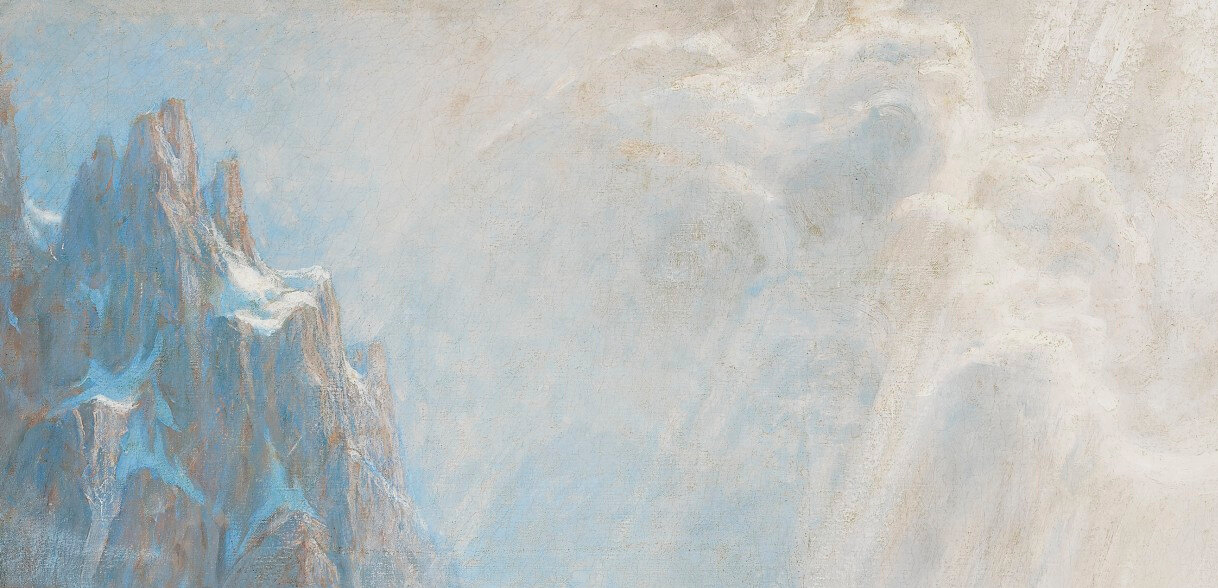
    Oil on canvas, 52.2 × 30 cm. Signed lower right. Private collection. Detail: the peak

    Inscribed on the reverse ‘The MOUNTAIN MISTS/Sketch for the large picture’. Bonhams: it ‘might be considered a smaller version of the prime painting, rather than a preparatory study’, and ‘earlier, looser sketches are known’, for which the note cites a sale of 17 March 1994 and Toll’s colour plates 38 and 39.

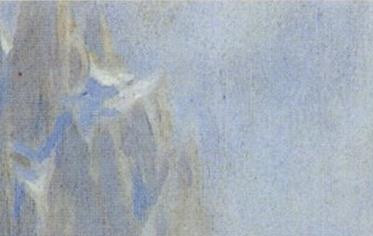
  2. Oil study for ‘Clyties of the Mist’, Wikimedia Commons

    Wikimedia Commons

    Oil study for ‘Clyties of the Mist’

    Oil on canvas. Known from a photograph that gives neither size nor owner. Detail: the peak

    Not the Bonhams sketch: here the peak stands against the edge of the canvas, as it does in the finished picture, and the lowest figure lies further left. Whether this is the sketch the Art Renewal Center lists as no. 53021, or one of the ‘earlier, looser sketches’, has not been established.

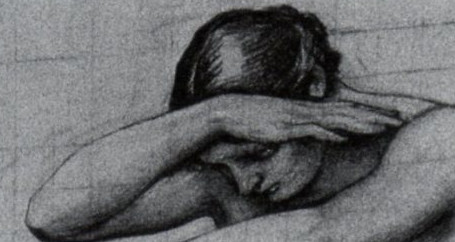
  3. Study for the foreground figure of ‘Clyties of the Mists’, Art Renewal Center 53022

    Art Renewal Center 53022

    Study for the foreground figure of ‘Clyties of the Mists’

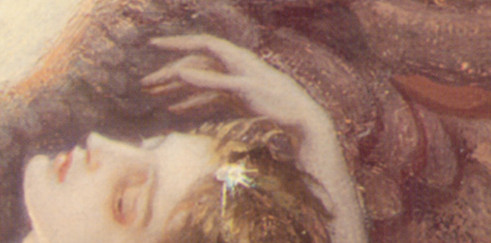
    Known from a photograph; the sheet is ruled with a grid. Detail: the head and the arm laid across it

    The second name again, here in the plural: Mists. The arm across the brow is that of the figure at the right of the canvas.

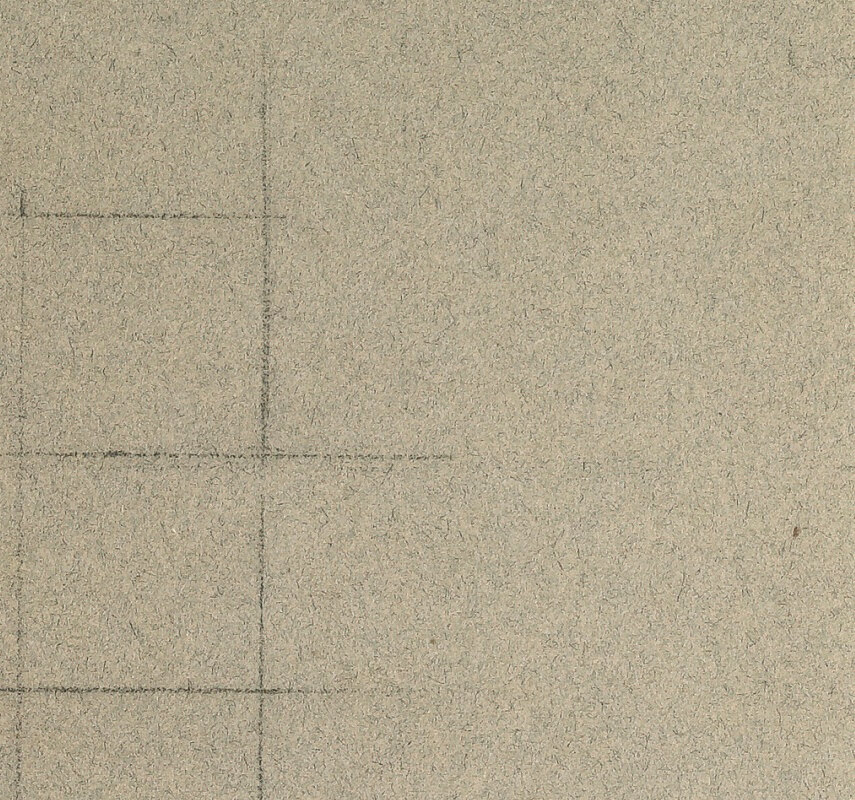
  4. Study for ‘The Kelpie’

    Toll HJD165.iv

    Study for ‘The Kelpie’ – in this exhibition, no. 5

    Leicester Galleries, 1913, no. 44, as Study for a Bather. Detail: the head on the squaring lines. On the two sheets: Christie’s, 2007

    Christie’s, 2007, sets this sheet after the study it was selling, Toll no. 165.iii: it ‘must be later than ours since it is squared for transfer and shows the model’s head turned more to the left, as it is in the painting’.

  5. The Kelpie, Lady Lever Art Gallery

    Lady Lever Art Gallery

    The Kelpie

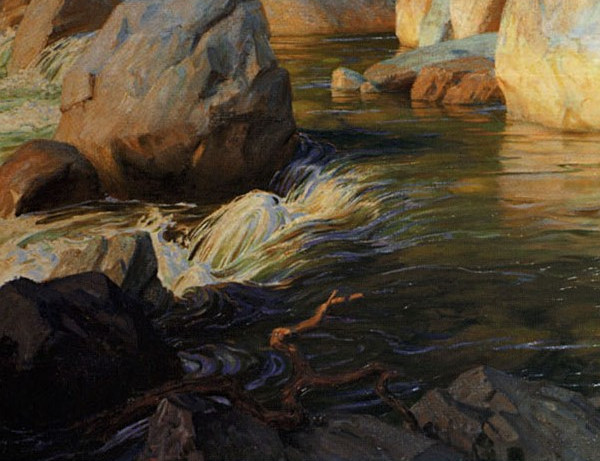
    1913. Oil on canvas, 135 × 193 cm. Port Sunlight; bought by W. H. Lever in 1913. Detail: the rapids, from a photograph

    The picture that followed, shown at the Academy in 1913. Studies for it and for this one were sold together in 2018.

  6. Day and the dawn-star, Royal Academy 1906, no. 545

    Royal Academy 1906, no. 545

    Day and the dawn-star

    Shown at the Academy in 1906. Private collection. Detail: Dawn, the star in her hair, from a photograph

    The other entry with lines and no name. Christie’s, 2003: it was bought by Sir Robert Ropner, and Draper wrote to the Academy that ‘this is a rendering of the Nature-myth wherein the Dawn is absorbed and overwhelmed by the light of Day’. Bonhams records a study for it, sold on 6 December 2000 as lot 98, of the same size as the sketch for this picture.

Without a photograph here: Chiswick Auctions, 2018, lot 88, studies for The Kelpie and Clyties of the Mist, charcoal and white chalk on buff paper, 48.5 × 33.4 cm, signed with initials, formerly with Julian Hartnoll; Art Renewal Center 53021, Sketch for ‘Clyties of the Mist’; a study for the central figure. A smaller version of the picture of 1906 was sold at Christie’s, London, 25 November 2003, lot 153. The lot essay of 2021 also compares the lower left figure with Leighton’s Clytie of 1895–96 and the whole with Segantini’s The Punishment of Luxury of 1891. These comparisons are Christie’s and have not been tested here.

Variant readings · Lectiones variae

The Gallery does not choose for its sources: where they part, each is set down.

The title in the sale note
  • Christie’s, 2021, heading: The Mountain Mists
  • Christie’s, 2021, lot essay: ‘The Morning Mists is one of the artist’s most symbolist paintings’
The word in the couplet
  • Royal Academy catalogue, 1912: ardour
  • Pall Mall Magazine Extra, 1912: ardour
  • Christie’s, 2021, as the Academy’s text: ardor
The picture of 1906
  • Royal Academy catalogue, 1906: Day and the dawn-star
  • Christie’s, 2021: Dawn and the Daystar
  • Bonhams, 2022: Day and the Dawnstar
The lines of 1906
  • Christie’s, 2021: ‘Draper described the Dawnstar’s fate’
  • Tennyson, 1855: Maud, section XXI, stanza 2
The second name
  • Cassell’s volume, 1912: Clyties of the Mist
  • Christie’s, 2021: ‘sometimes also called’
  • Art Renewal Center: Clyties of the Mist; Clyties of the Mists
Sir Robert Ropner’s dates
  • Christie’s, 2021: 1828–1934
  • Reference works: 1838–1924
The sale of 1950
  • Christie’s, 2021: ‘His estate sale’
  • The record of his death: Died 26 February 1924
The Sketch
  • Christie’s, 2021: 8 May 2012
  • The journal’s date: 8 May 1912
The painter’s birth
  • Christie’s, 2021; Bonhams, 2022: 1864
  • Toll, 2003, on the title page: 1863
The size
  • Cassell’s volume, 1912: 84 × 46
  • Christie’s, 2021: 85 1/8 x 46 ½ in.

What this dossier adds · Addita

Measured against the literature printed by Christie’s in 2021, the fullest list open to the public. Simon Toll’s monograph of 2003 could not be consulted for this dossier, and any of what follows may already stand in it.

  1. The titleThe Academy’s rules required title and description to come from the artist, on a signed form. By that rule The Mountain Mists and its couplet are what Draper himself sent in.
  2. The coupletIt carries no author’s name, and in his entries that proves nothing: the lines printed the same way in 1906 are Tennyson’s. Those of 1912 have not been traced.
  3. The second nameClyties of the Mist was in print in 1912, on the plate and in the index of Cassell’s volume of Academy pictures. It dates from the same year as the first.
  4. Three noticesC. H. Collins Baker in The Saturday Review, H. S. in The Spectator, and an unsigned writer in a pharmacists’ weekly, the only one of the three to admire the picture.
  5. The reproductionOn 9 November 1912 the Autotype Fine Art Company advertised its reproductions of the year’s Academy on this picture. The firm had reproduced a Draper as early as 1890.
  6. The formatLaid over the present photograph of the canvas, the plate of May 1912 agrees at the edges to within 1–2 per cent: nothing suggests the canvas has been cut or extended since.
  7. The ownersThe ‘estate sale’ of 1950 falls twenty-six years after Sir Robert Ropner’s death, in the year Skutterskelfe was offered in lots. Nick and Mary Mathews of Yorktown are identified as the keepers of Nick’s Seafood Pavilion.
  8. The buyerChristie’s recorded in 2003 that Sir Robert Ropner bought the Academy picture of 1906 as well: the two entries with lines and no name went to one collector.
  9. The oil studyThe study photographed on Wikimedia Commons is not the sketch sold by Bonhams in 2022: the peak and the lowest figure stand elsewhere. At least two small oils of the subject exist.
  10. Where to lookNine open questions, each with the record that could answer it. The Academy’s own Notice says that every purchase was registered.

What is not known · Quaestiones 9

Under each question, the record that could answer it.

  1. The coupletWho wrote it?Draper’s form of 1912, if it survives; a printed source that full-text search cannot reach.
  2. The second nameWho called the picture Clyties of the Mist, and how did the name reach Cassell’s?The publisher’s files; Toll, 2003.
  3. First buyerWas it sold from the Academy’s walls, and to whom? Christie’s says only that Sir Robert Ropner ‘probably acquired’ it from the artist.The Academy’s Price Catalogues and register of purchases for 1912; the Ropner family’s papers.
  4. The letter of 1906Christie’s quotes, without a reference, a letter from Draper to the Academy on Day and the dawn-star. Where is it, and did he write in the same way in 1912?The Royal Academy’s archive; Toll, 2003, pp. 126–130.
  5. The frameDoes the frame of 1912 survive, with the name, address and title the Notice required on its back?The present owner; photographs from the sales of 2000 and 2021.
  6. The first pressWhat did Spielmann (The Daily News, 2 April 1912), The Scotsman (7 May) and The Sketch (8 May) say?Those pages, which could not be opened for this dossier.
  7. The reproductionDoes an Autotype impression survive, and in what size?The company’s illustrated catalogue, offered in the advertisement; print rooms.
  8. 1950Who consigned the picture, what was the second work in lot 42, and who was Bagnel?Christie’s annotated catalogue of 17 November 1950.
  9. VirginiaHow did the picture cross the Atlantic, and where did it hang, in the restaurant or in the house?‘The Treasures Of Miss Mary’, Daily Press, 28 November 1998; the records of Kemp’s Antiques, Grafton.

Sources

All quotations were checked against images of the pages, not against recognised text. Royal Academy catalogues of 1906 and 1912: Paul Mellon Centre, CC BY-NC 4.0. The Saturday Review, The Spectator, The Chemist and Druggist, The Illustrated London News, The Academy, Cassell’s volume, the Pall Mall Magazine Extra and Tennyson’s Maud: Internet Archive. Sales: lot pages of Christie’s, Bonhams and Chiswick Auctions. Skutterskelfe: Yorkshire Gardens Trust, Hambleton District Historic Report. Wikipedia: Robert Ropner, Henry Strachey. Yorktown: articles by Greg A. Lohr in the Daily Press, read in the Wayback Machine. Not consulted: Toll, 2003, and the entries marked with an asterisk.

How to cite

After The Chicago Manual of Style (18th edn, 2024), in the form used in art-historical publications.

Note
“Dossier: The Mountain Mists. Supplementary material to the exhibition What Song the Syrens Sang,” Lacrimae Rerum Gallery, LR 9.14, accessed 7 November 2026, https://lacrimaererum.art/draper/what-song-the-syrens-sang/fasciculus/.
Bibliography
Lacrimae Rerum Gallery. “Dossier: The Mountain Mists. Supplementary material to the exhibition What Song the Syrens Sang.” LR 9.14. Accessed 7 November 2026. https://lacrimaererum.art/draper/what-song-the-syrens-sang/fasciculus/.