Exhibition
Rooms and Copenhagen
det jeg vil kalde den arkitektoniske Holdning i Billedet
what I would call the architectonic bearing of the picture
Hammershøi to an interviewer, taken down in shorthand · Bramsen, 1918, p. 64

Vilhelm Hammershøi 1864–1916
Selection
Sixteen paintings from the National Gallery of Denmark.
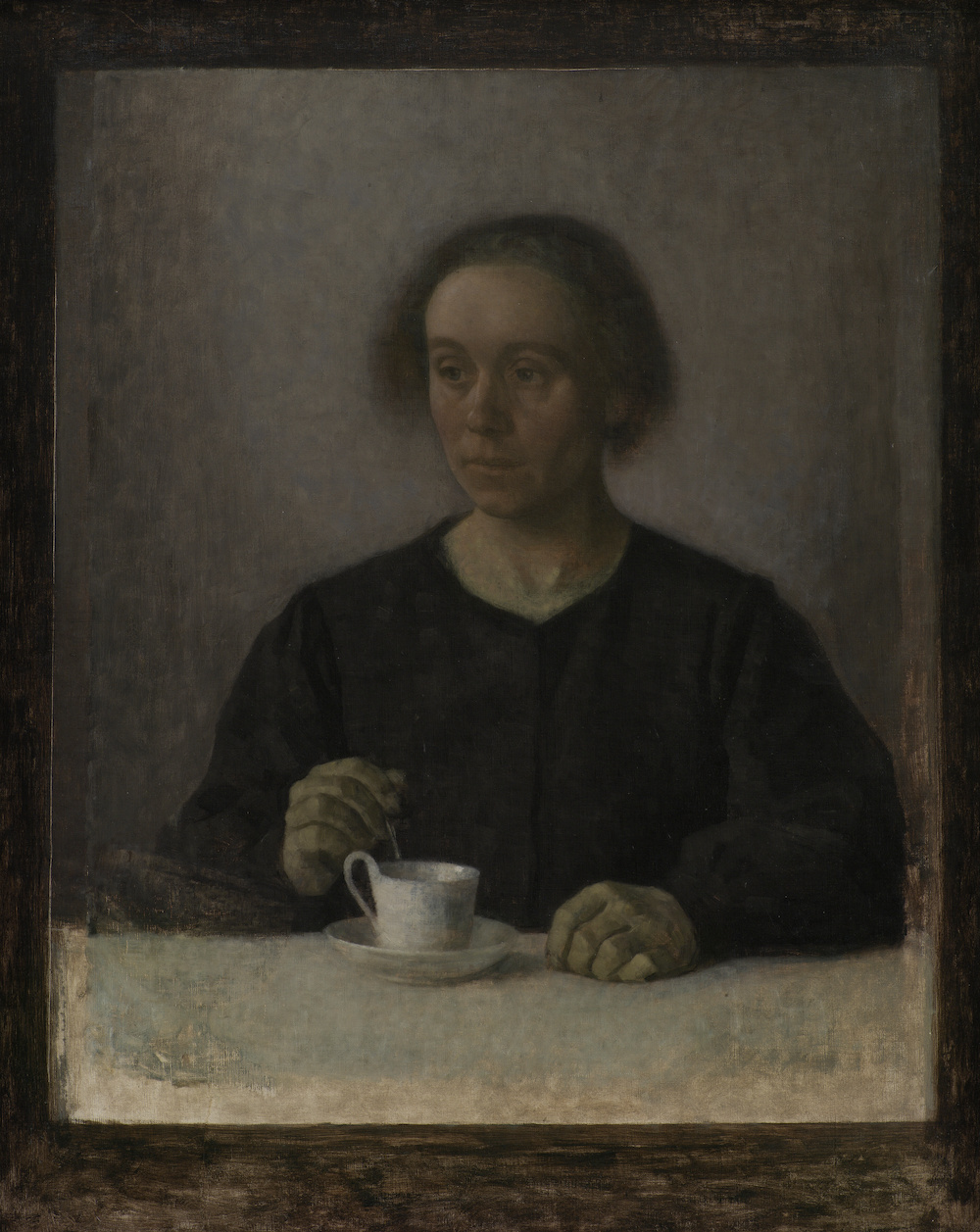
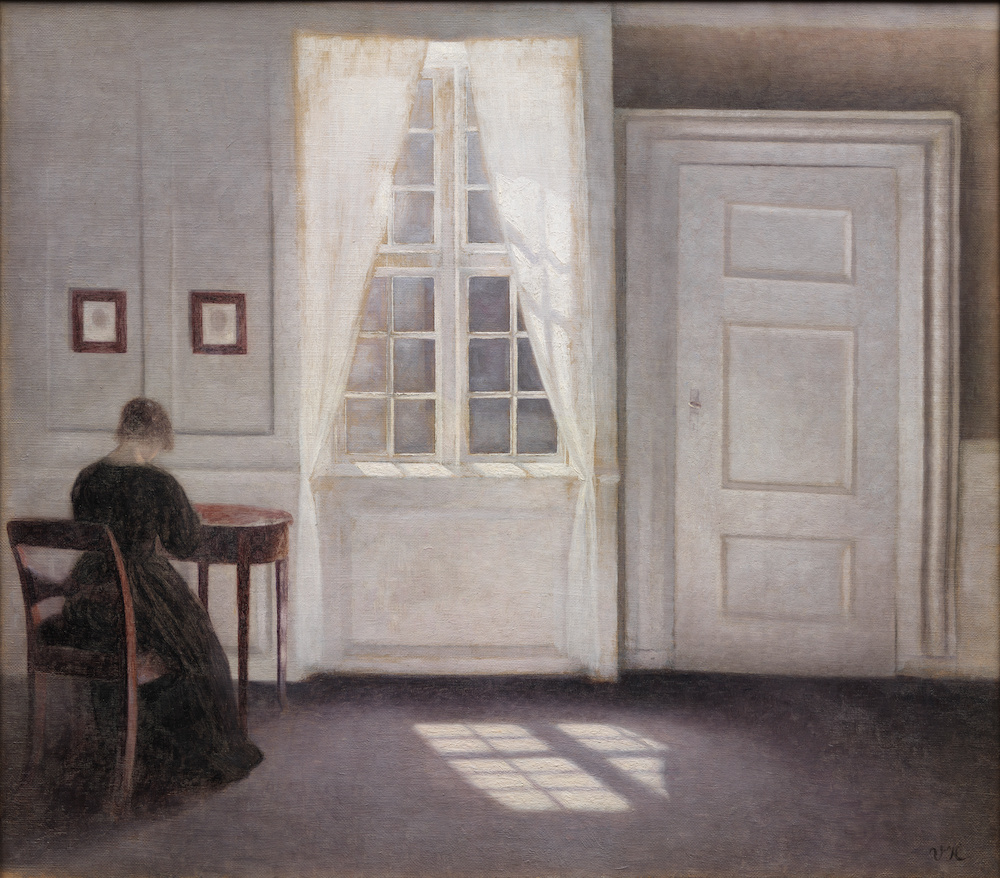
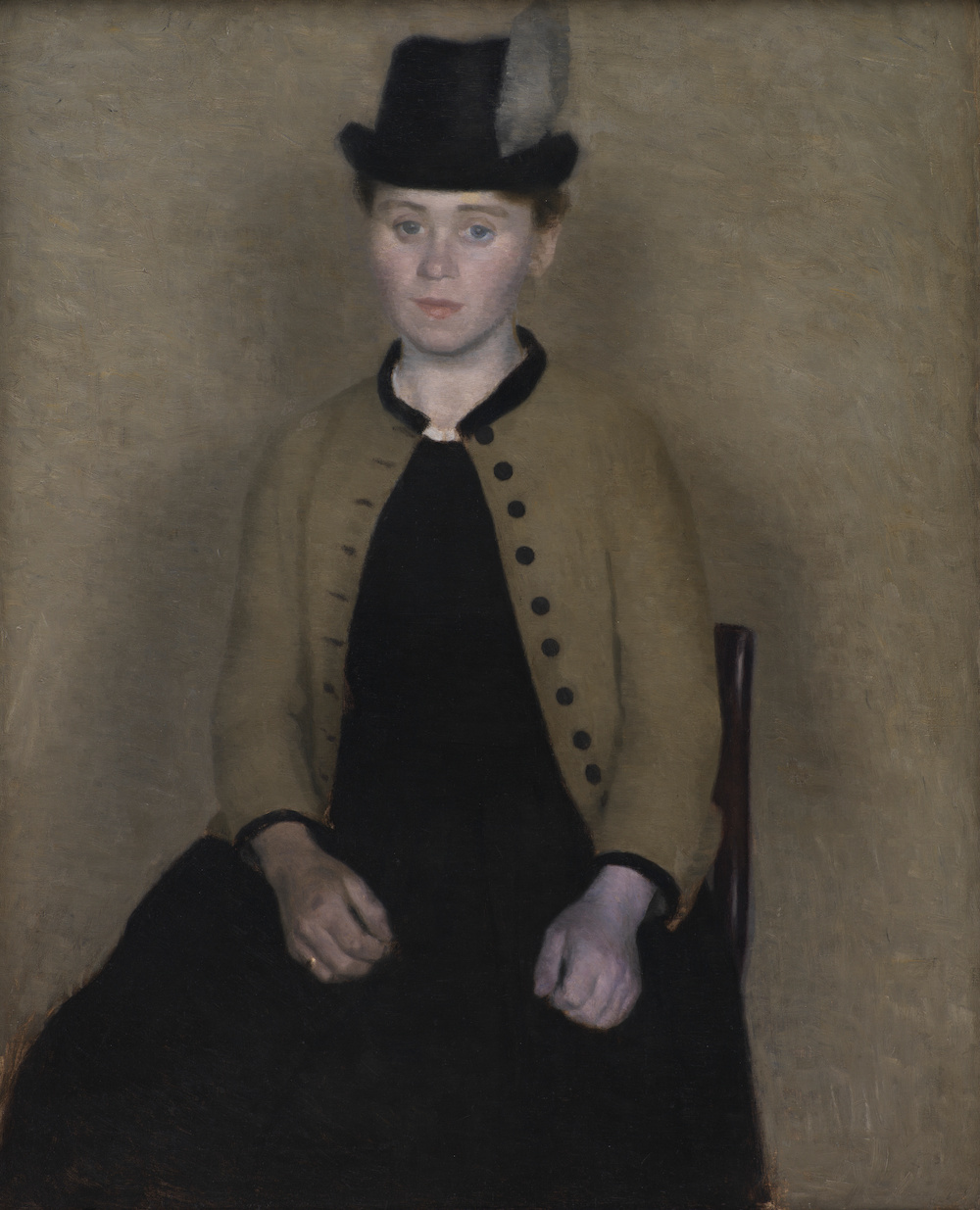
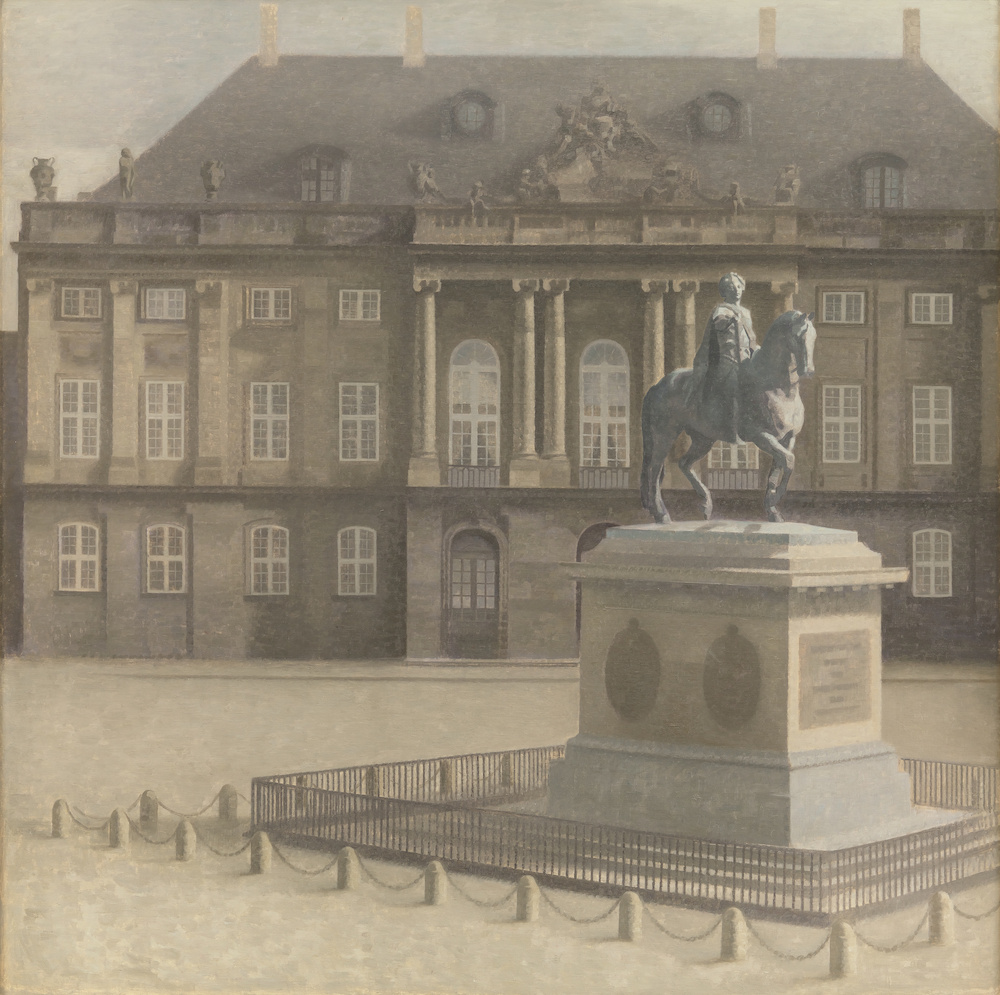
Five by which he is known: Interior in Strandgade, Sunlight on the Floor, Interior. Artificial Light, Amalienborg Square, Copenhagen, Ida Hammershøi, the Artist’s Wife, with a Teacup, Ida Ilsted, Later the Artist’s Wife.
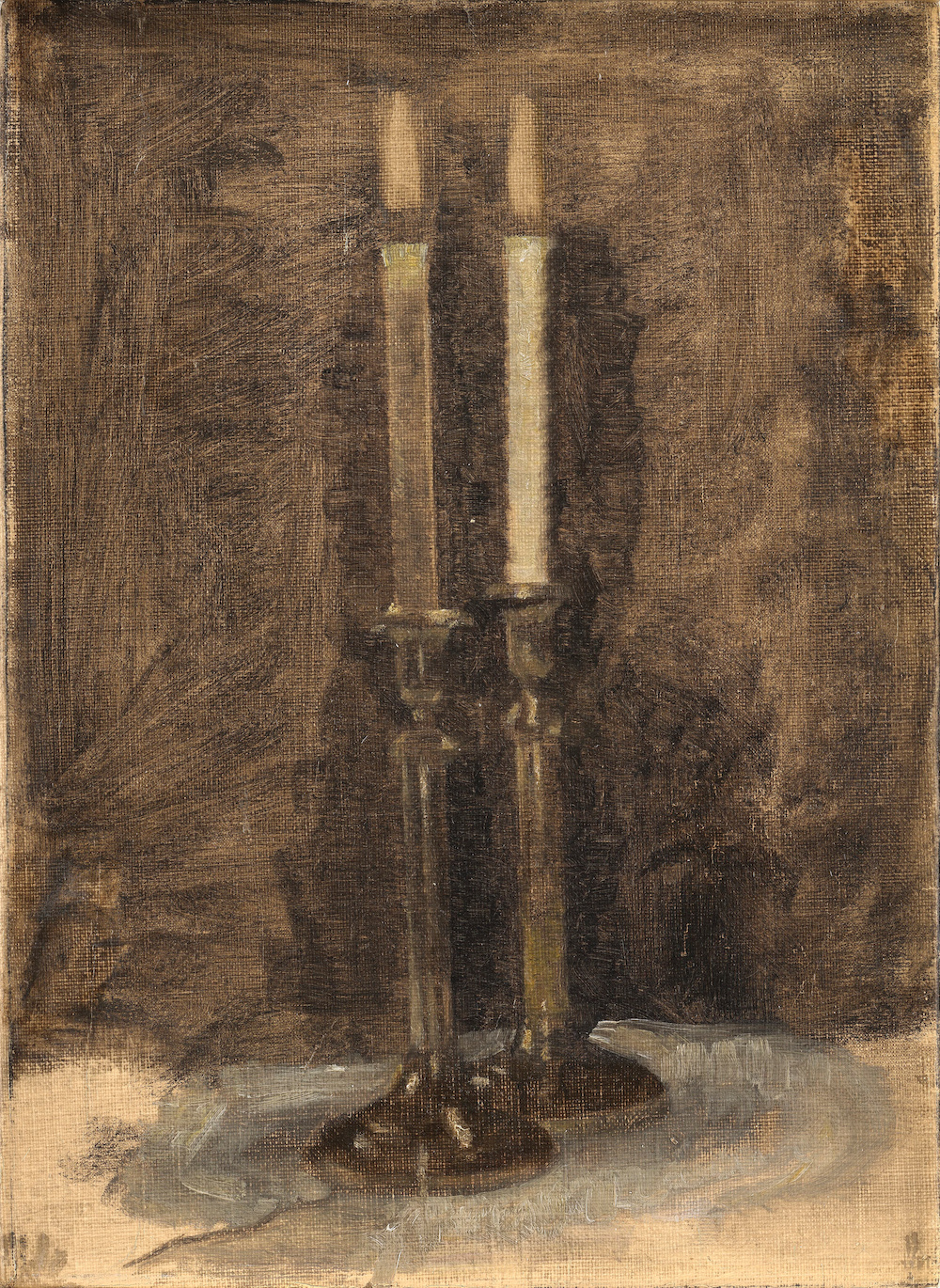
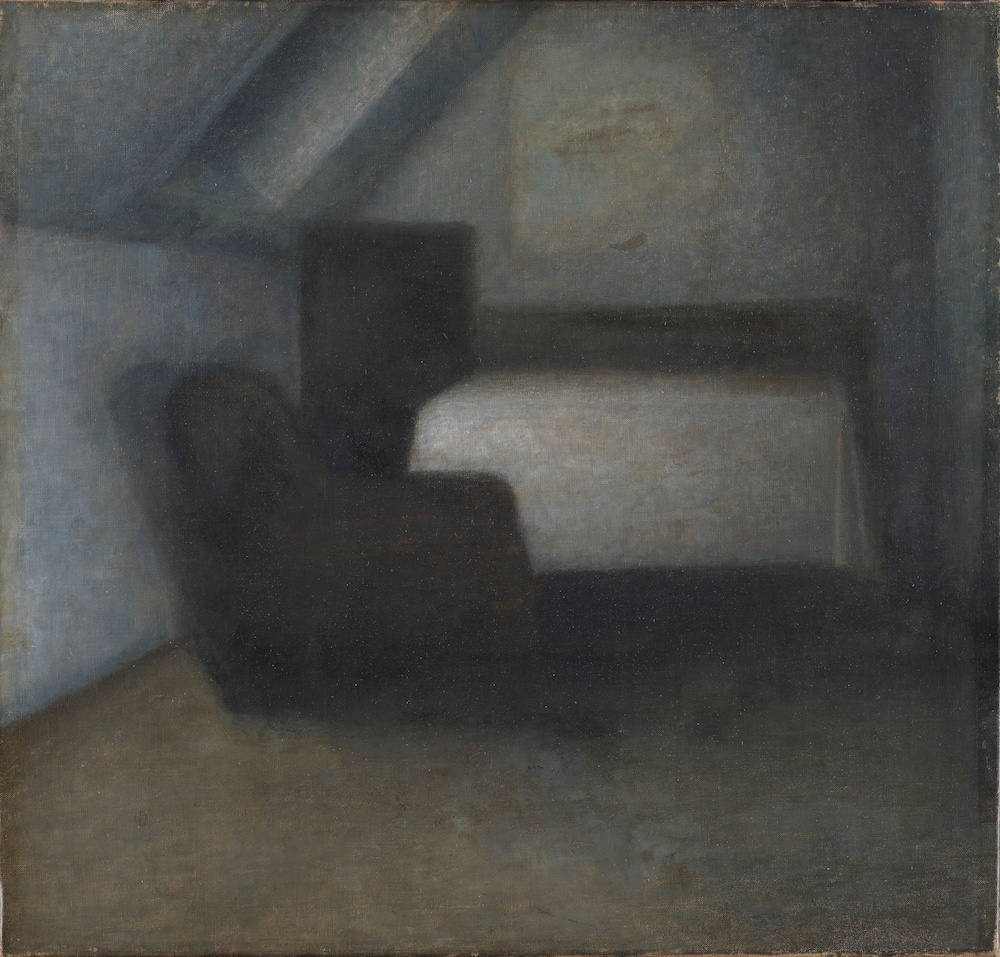
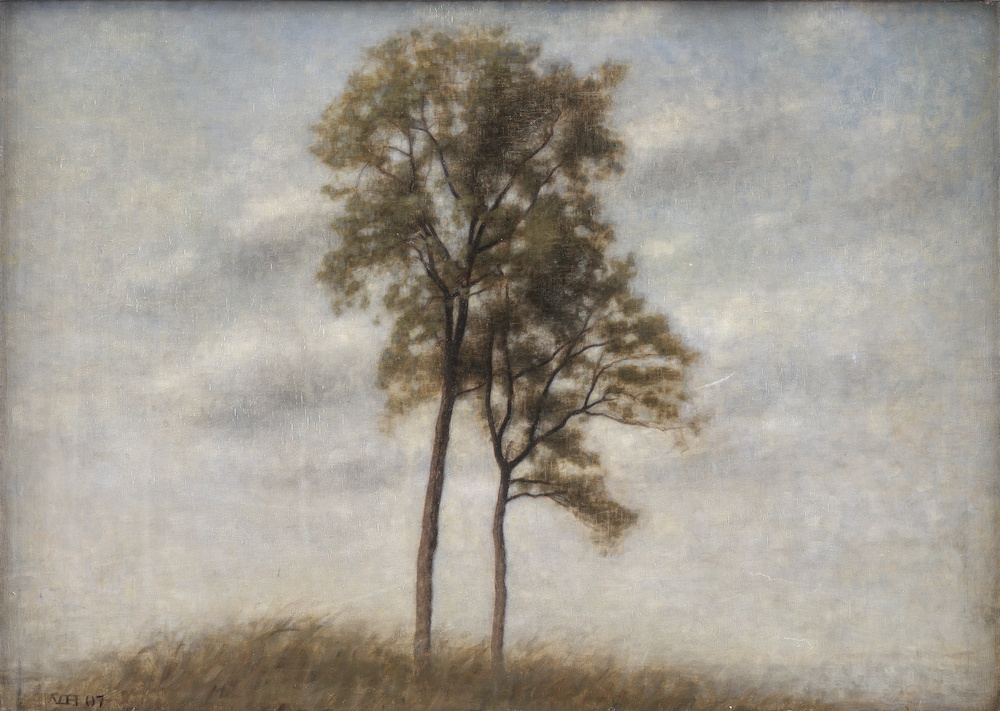
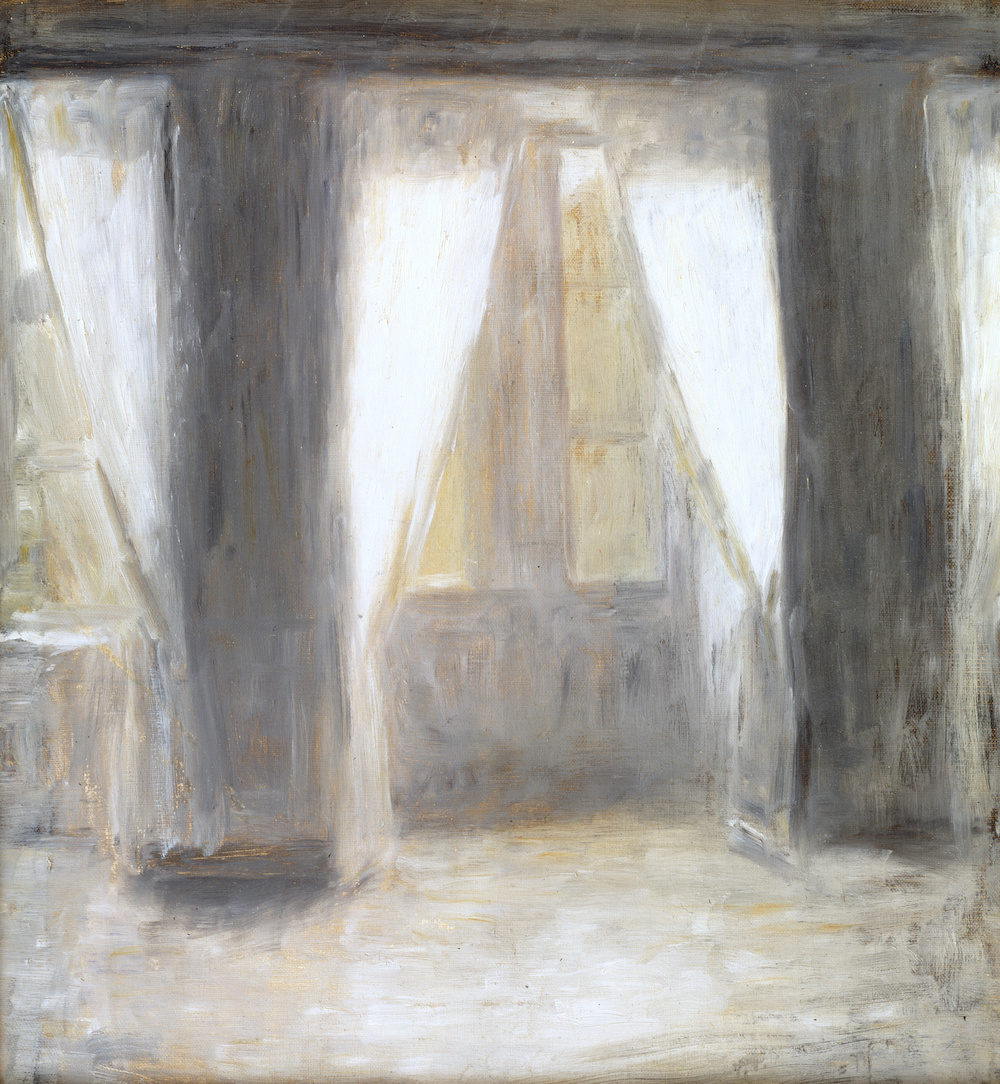
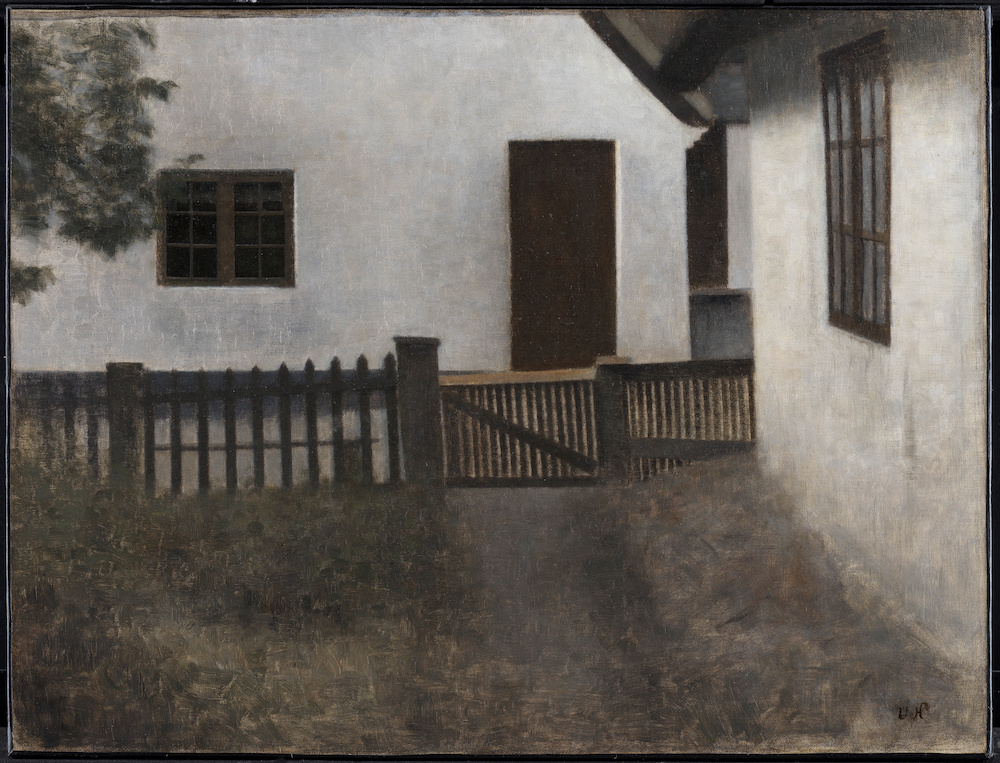
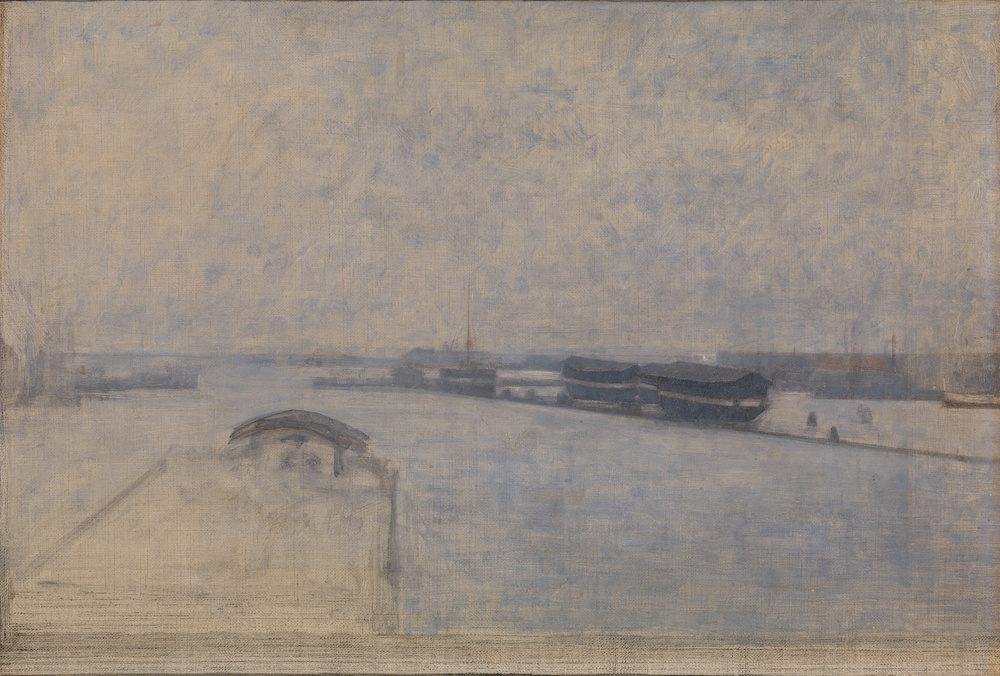
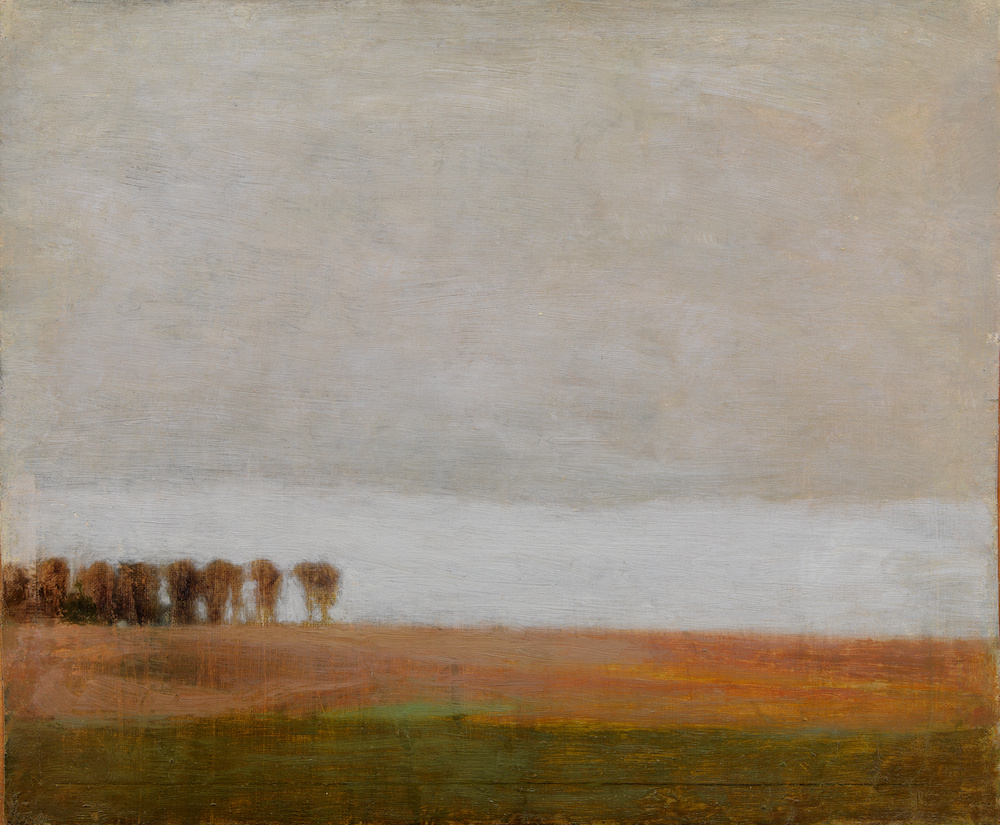
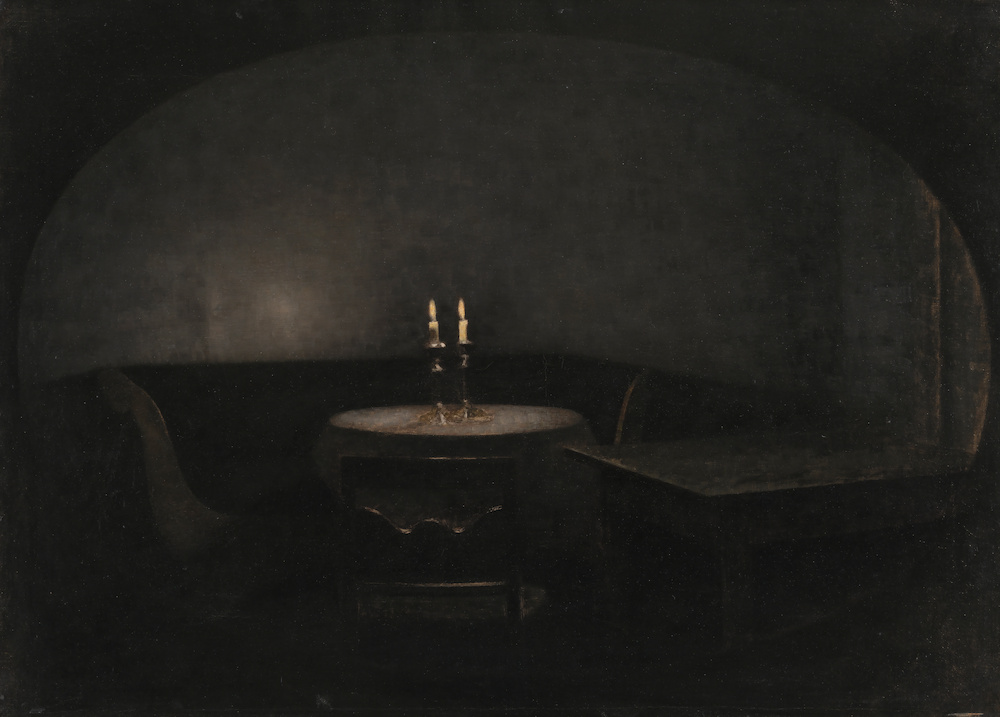
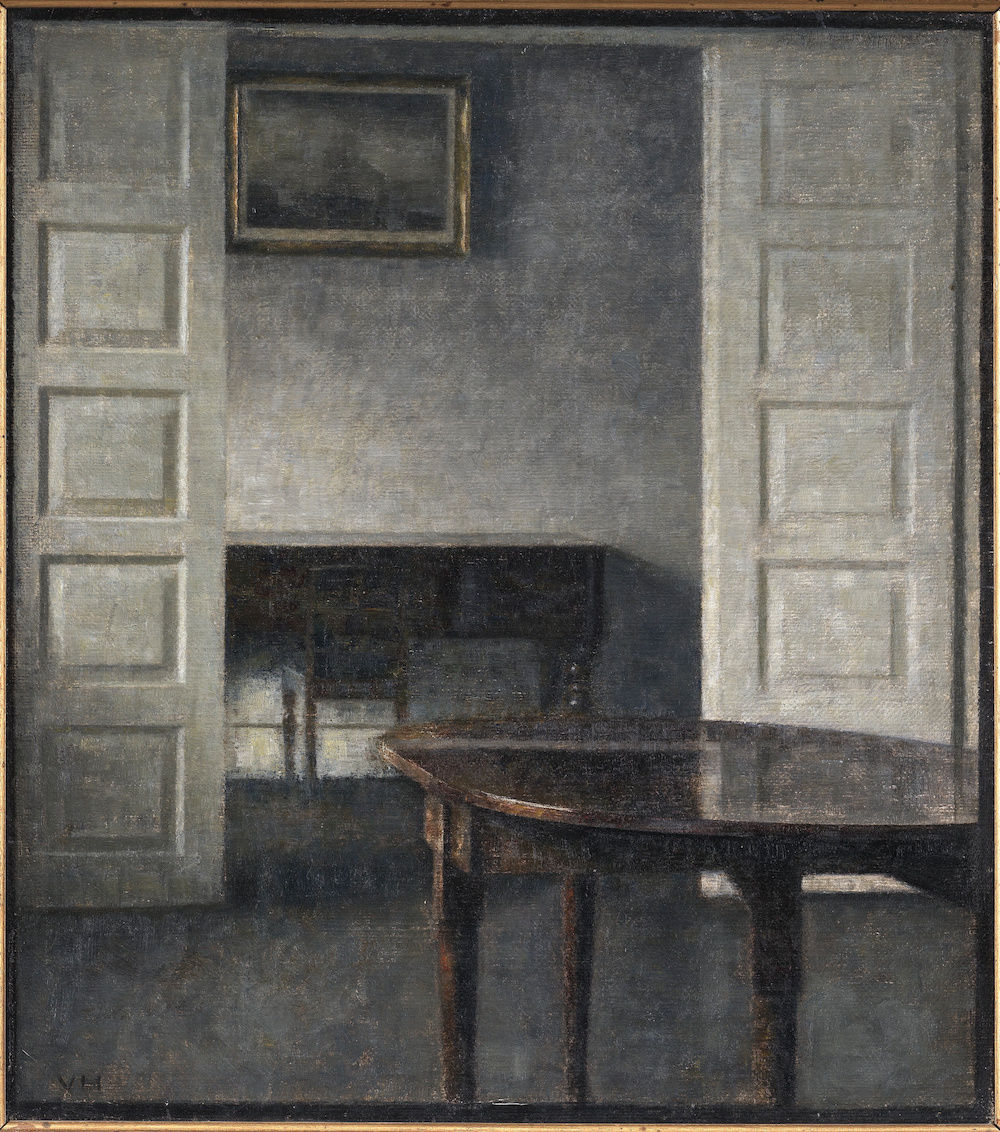
Eight that scarcely appear in the encyclopaedias: Attic Room with a Table and Chair, View of Jægersborg Allé, Gentofte, North of Copenhagen, A Room in the Artist’s Home in Strandgade, Copenhagen, with the Artist’s Wife, Two Candles on a Table, House Gables. Frederiksværk. Summer, Young Oaks, The Harbour of Copenhagen Seen from Kvæsthusgade, Living Room. The Double Doors Stand Open to a Room with a Closed Piano.
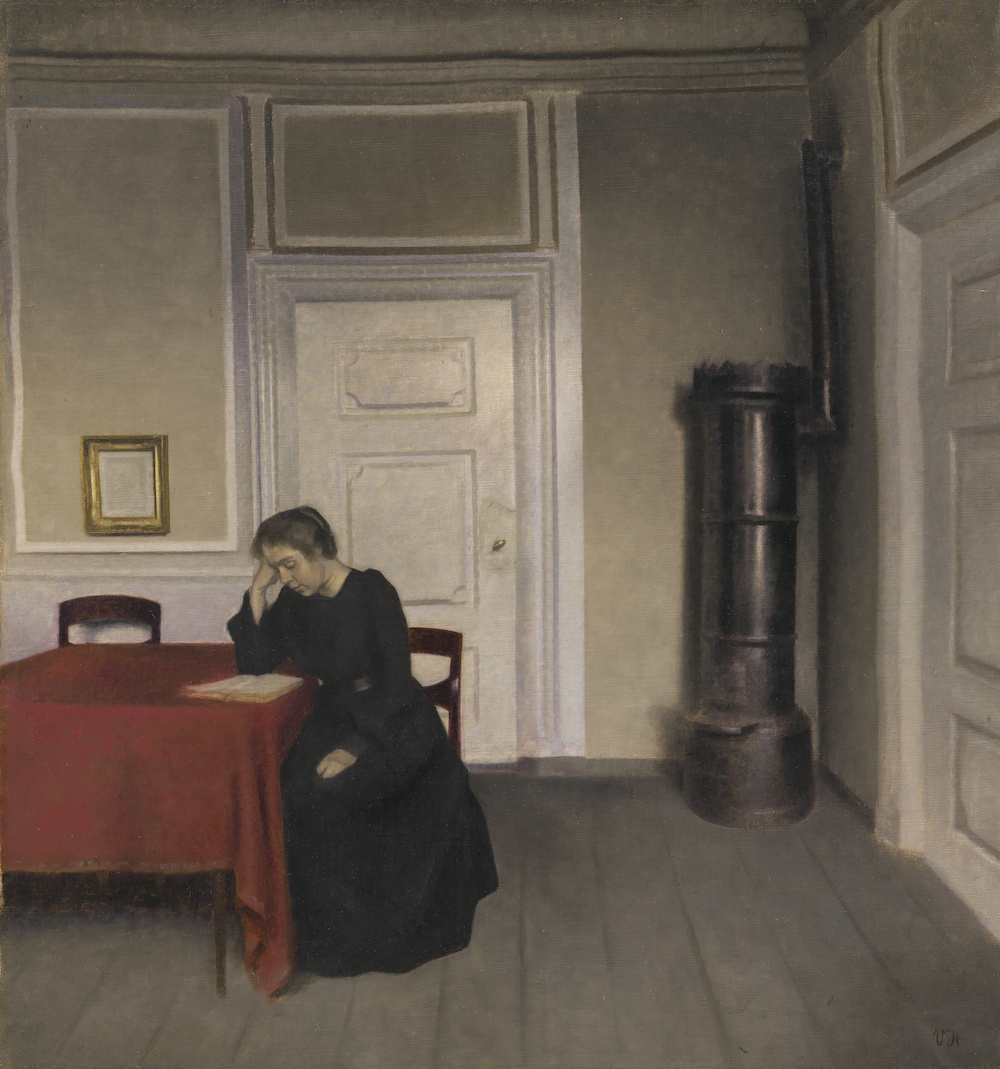
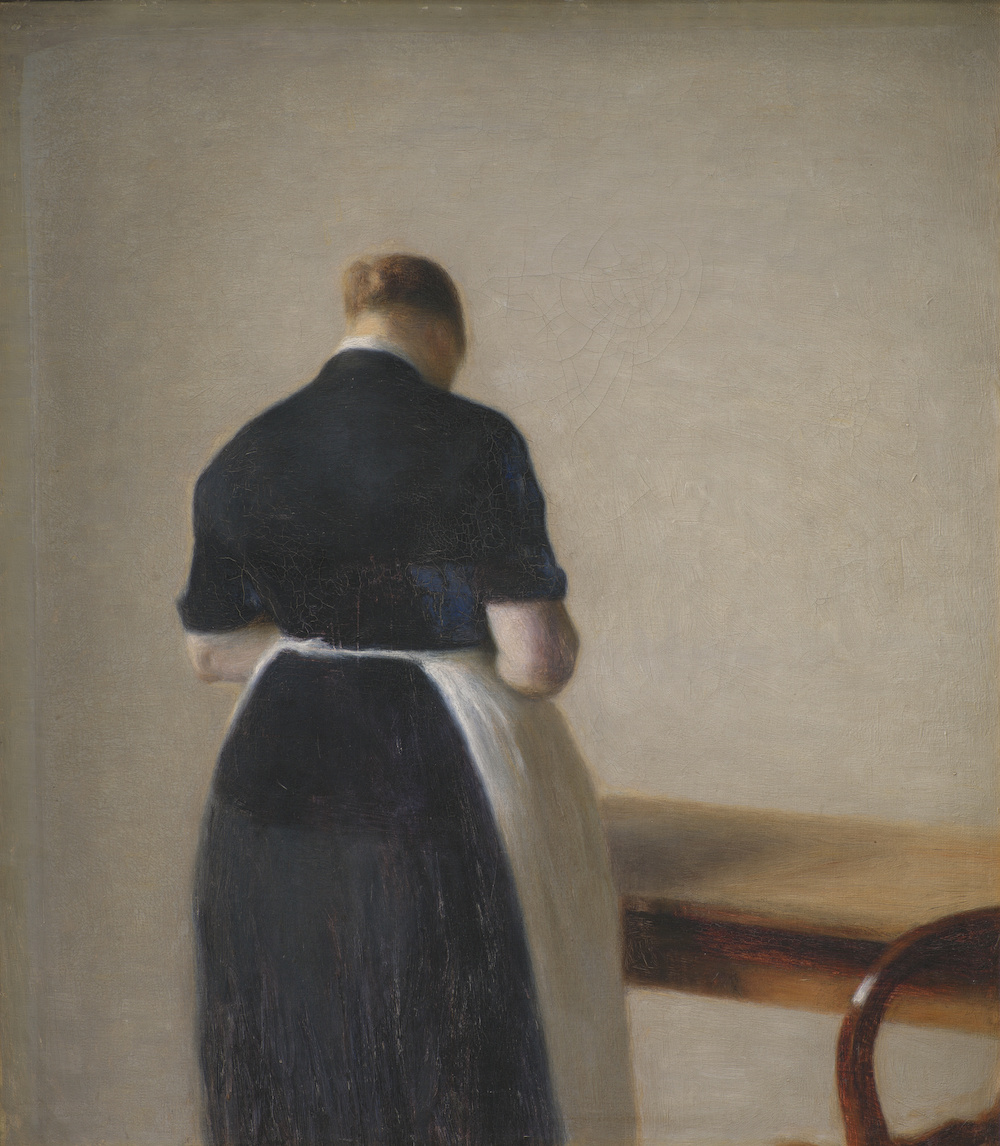
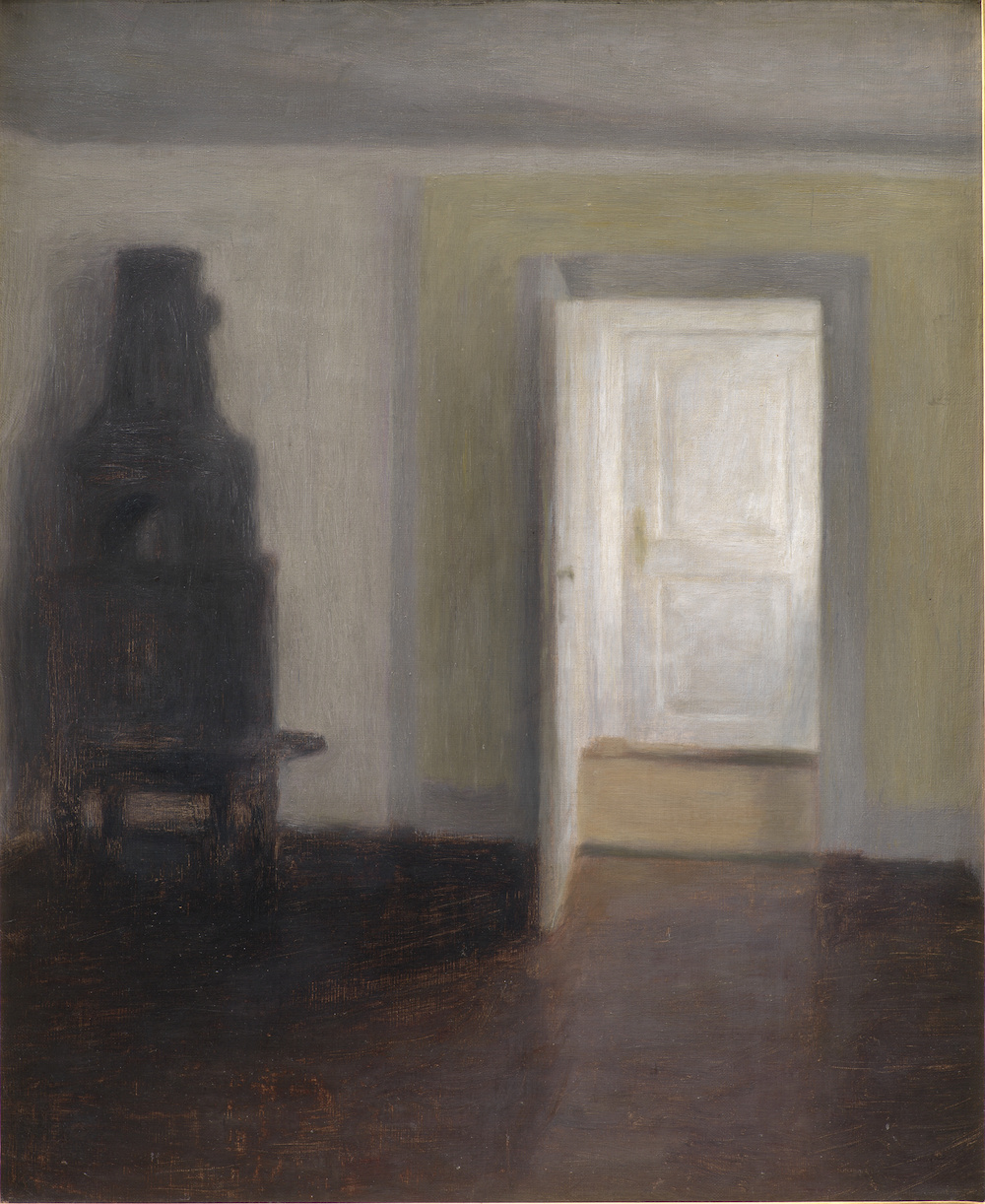
Three chosen by eye: The Dining Room in the Artist’s Home in Frederiksberg Allé, Copenhagen, Interior. An Old Stove, Woman Seen from the Back.

Hvad der faar mig til at vælge et bestemt Motiv, er især Linjen, det jeg vil kalde den arkitektoniske Holdning i Billedet. Naturligvis har Lyset ogsaa meget at sige, men Linjerne er dog næsten det, jeg holder mest af.
What makes me choose a particular motif is above all the line, what I would call the architectonic bearing of the picture. Light, of course, also counts for much, but the lines are almost what I care for most.
Hammershøi ist nicht von denen, über die man rasch sprechen muss. Sein Werk ist lang und langsam, und in welchem Augenblick man es auch erfassen mag, es wird immer voll Anlass sein, vom Wichtigsten und Wesentlichen in der Kunst zu sprechen.
Hammershøi is not one of those of whom one must speak in haste. His work is long and slow, and at whatever moment one may grasp it, it will always be full of occasion to speak of what is most important and essential in art.
- Gallery number
- LR 7
- Section
- Painting
- Movement
- ‘Symbolism’
- Works
- 16
- Opened
- 19 September 2026
- Images
- National Gallery of Denmark (SMK), public domain.
Appendices · Appendices
- ISupplementary materialWhere each work is held: collection, acquisition, inscriptions, exhibitions, literature.
- IIIndexEvery work in the exhibition in a single table: dates, catalogue numbers, collections, inventory numbers.
- IIISeven DwellingsThe artist’s seven Copenhagen addresses from Bramsen’s catalogue of 1918: the years, Bramsen’s words, photographs of the places.
- IVPlacesA map of Copenhagen: where he lived, and where he stood when he painted.
- VDossier of the principal workInterior in Strandgade, Sunlight on the Floor: the artist’s words on line and light, the entry in the catalogue raisonné of 1918, canvas and signature, provenance, exhibitions, literature, and the same apartment in other collections.
- VICorrectionsWhat was wrong in the record of the exhibition, and when it was put right; latest correction: 5 October 2026.
Music of the room
Bramsen (1918, p. 46) writes that Hammershøi was captivated by Franck’s chamber music: ‘Jeg erindrer tydeligt — sagde han — da jeg første Gang hørte den’: ‘I remember clearly, he said, when I heard it for the first time’. That was in the eighties, when Louis Glass introduced the Copenhagen Chamber Music Society to Franck. Which work it was Bramsen does not say; the sonata was written in 1886. In the same place: after hearing Cavalleria rusticana, Hammershøi replied to Bramsen that he hoped never to hear it again.
-
Principal work of the exhibition
-
-
-
-
-
-
-
-
-
-
-
-
-
-
-