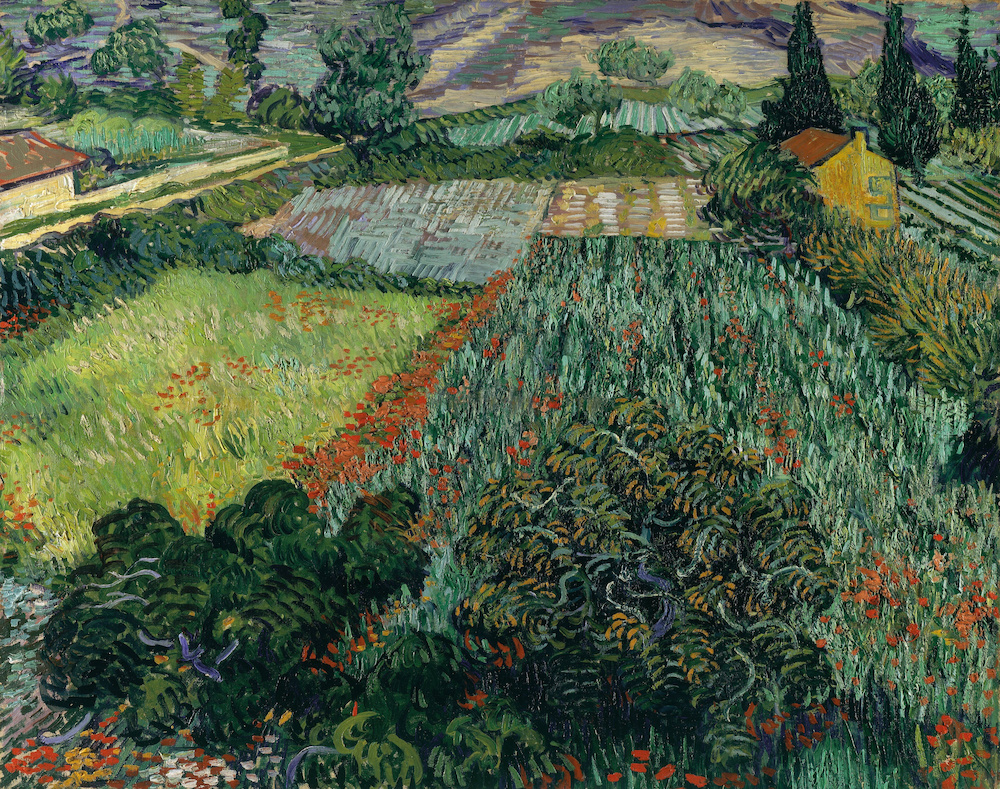
Exhibition
The Great Consolation
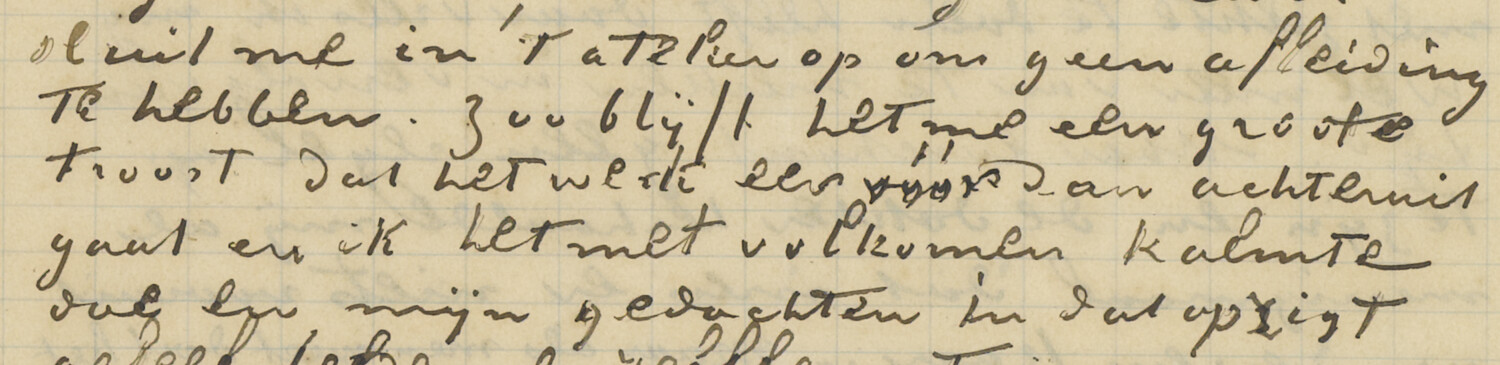
Zoo blijft het me een groote troost dat het werk eer vóór- dan achteruit gaat
So it remains a great consolation to me that the work goes forward rather than back.
To his mother, Saint-Rémy-de-Provence, 19 September 1889 · letter 803
Vincent Willem van Gogh 1853–1890

Ah! mon cher ami, faire de la peinture ce qu’est déjà avant nous la musique de Berlioz et de Wagner.... un art consolateur pour les coeurs navrés! Il n’y a encore que quelques uns qui comme vous et moi le sentent!!!
Ah, my dear friend, to make of painting what the music of Berlioz and Wagner has already been before us… an art of consolation for broken hearts! There are as yet only a few who feel this as you and I do!!!
je croirais presque que ces toiles vous diront ce que je ne sais dire en paroles, ce que je vois de sain et de fortifiant dans la campagne.
I would almost believe that these canvases will tell you what I cannot say in words, what I see that is healthy and fortifying in the country.
- Gallery number
- LR 4
- Section
- Painting
- Movement
- ‘Post-Impressionism’
- Works
- 100
- Opened
- 25 November 2008
Appendices · Appendices
- ISupplementary materialWhere each work is held: collection, acquisition, inscriptions, exhibitions, literature.
- IIIndexEvery work in the exhibition in a single table: dates, catalogue numbers, collections, inventory numbers.
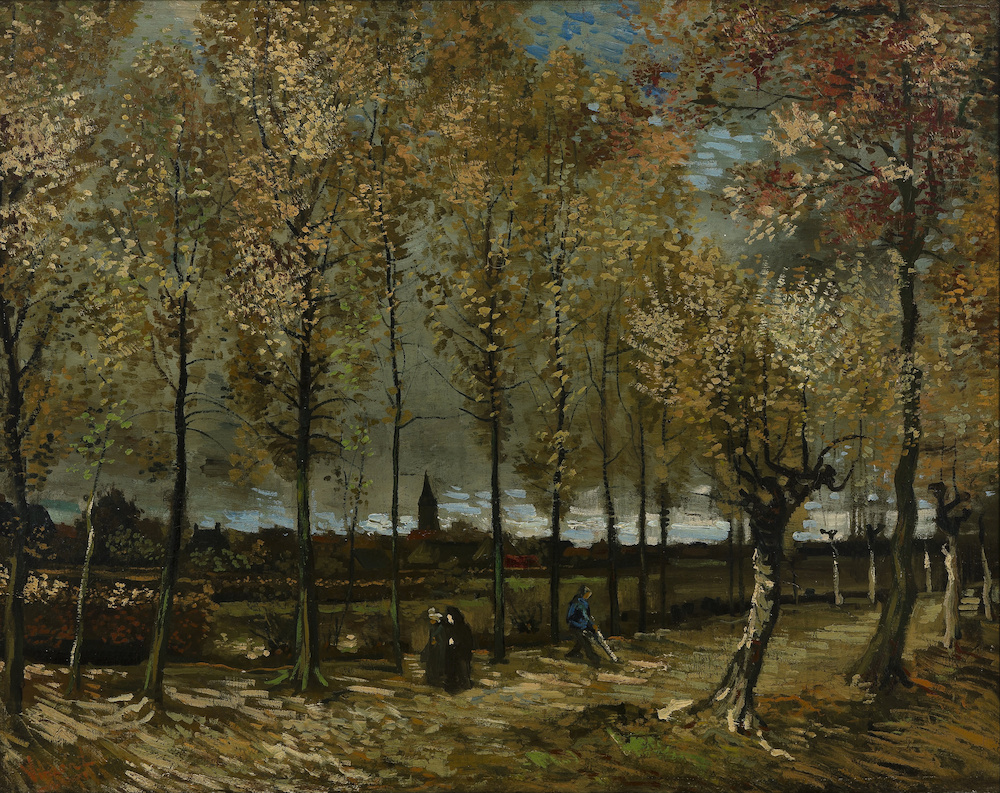
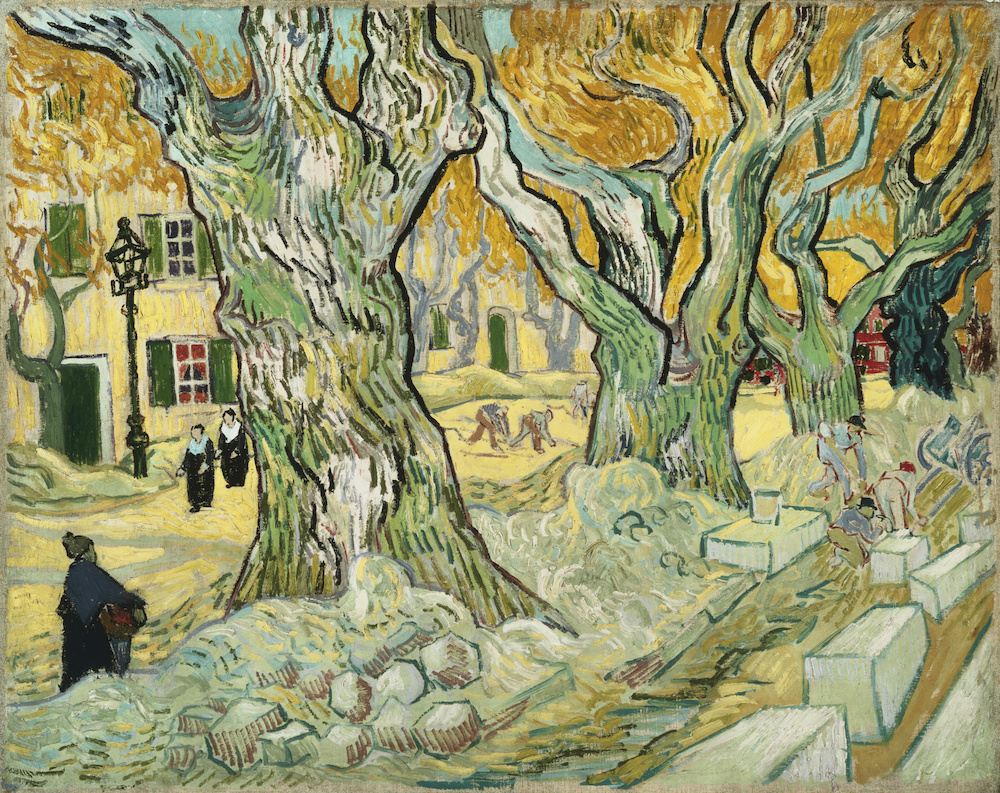
- IIIDossier of the principal workAvenue of Poplars in Autumn: letters and autographs, verses copied in his hand, first notices, canvas and frame, provenance, exhibitions, literature.
- IVCorrectionsWhat was wrong in the record of the exhibition, and when it was put right; latest correction: 4 October 2026.
Music of the room
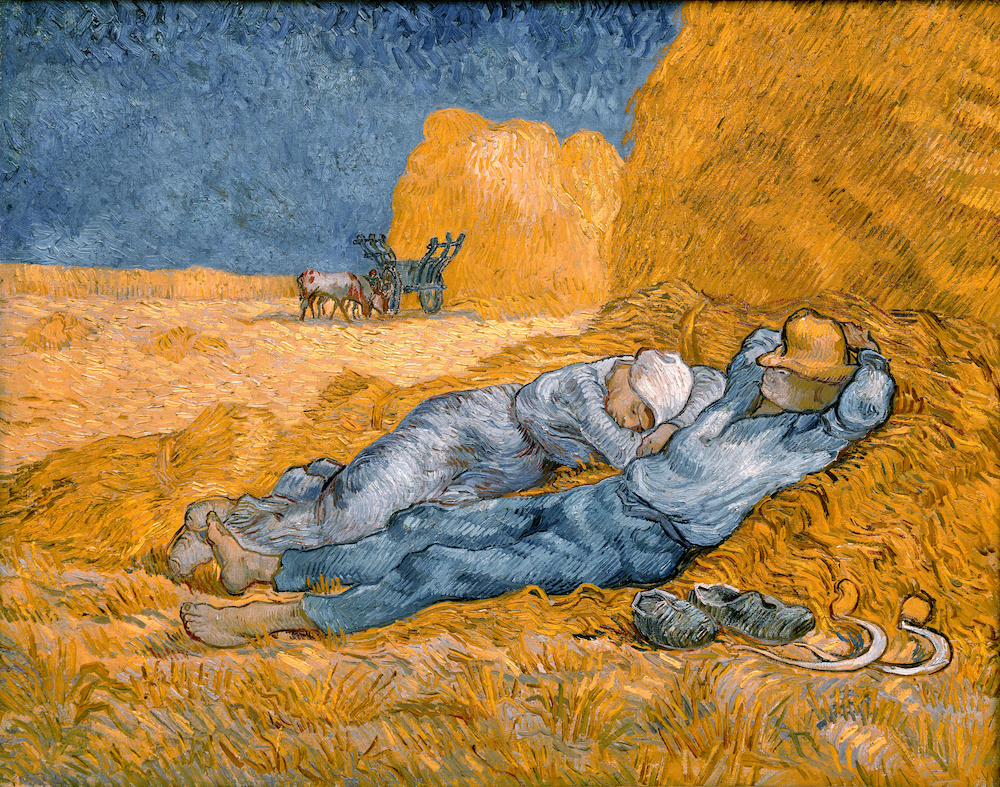
Vincent names Beethoven in a letter to Theo from Saint-Rémy in the same September days of 1889 as the letter to his mother that gave the exhibition its title. Copying Millet, he compares himself to a performer: ‘si telle personne jouera du Beethoven elle y ajoutera son interprétation personelle – en musique et alors surtout pour le chant’: ‘if this or that person plays Beethoven, that person will bring a personal interpretation to it – in music, and then above all in singing’ (letter 805). What he himself heard the letters do not say. Die Ehre Gottes aus der Natur, the fourth of six songs on poems by Gellert, op. 48 (1803), is a paraphrase of the nineteenth Psalm: ‘The heavens declare the glory of God.’
-
-
-
-
-
-
-
-
-
-
-
-
-
-
-
-
-
-
-
-
-
-
-
-
-
-
-
-
-
-
-
-
-
-
-
-
-
-
-
-
-
-
-
-
-
-
-
-