Skip to content
LACRIMAE RERVM Gallery

Exhibition · Supplementary material · Loca

Places

Where he lived and painted, and where the works were shown, for the exhibition What Song the Syrens Sang. The sources name the place where a work was painted for one work only; for the others they name where it was shown — the room at the Academy, the gallery, the city. Three sheets, each closer than the last: London, where he lived; the West End, where he showed; the rooms of the Academy. The maps and plans are of the time; the lines of the catalogues are given as printed.

Sheet I · 1891–1912

London

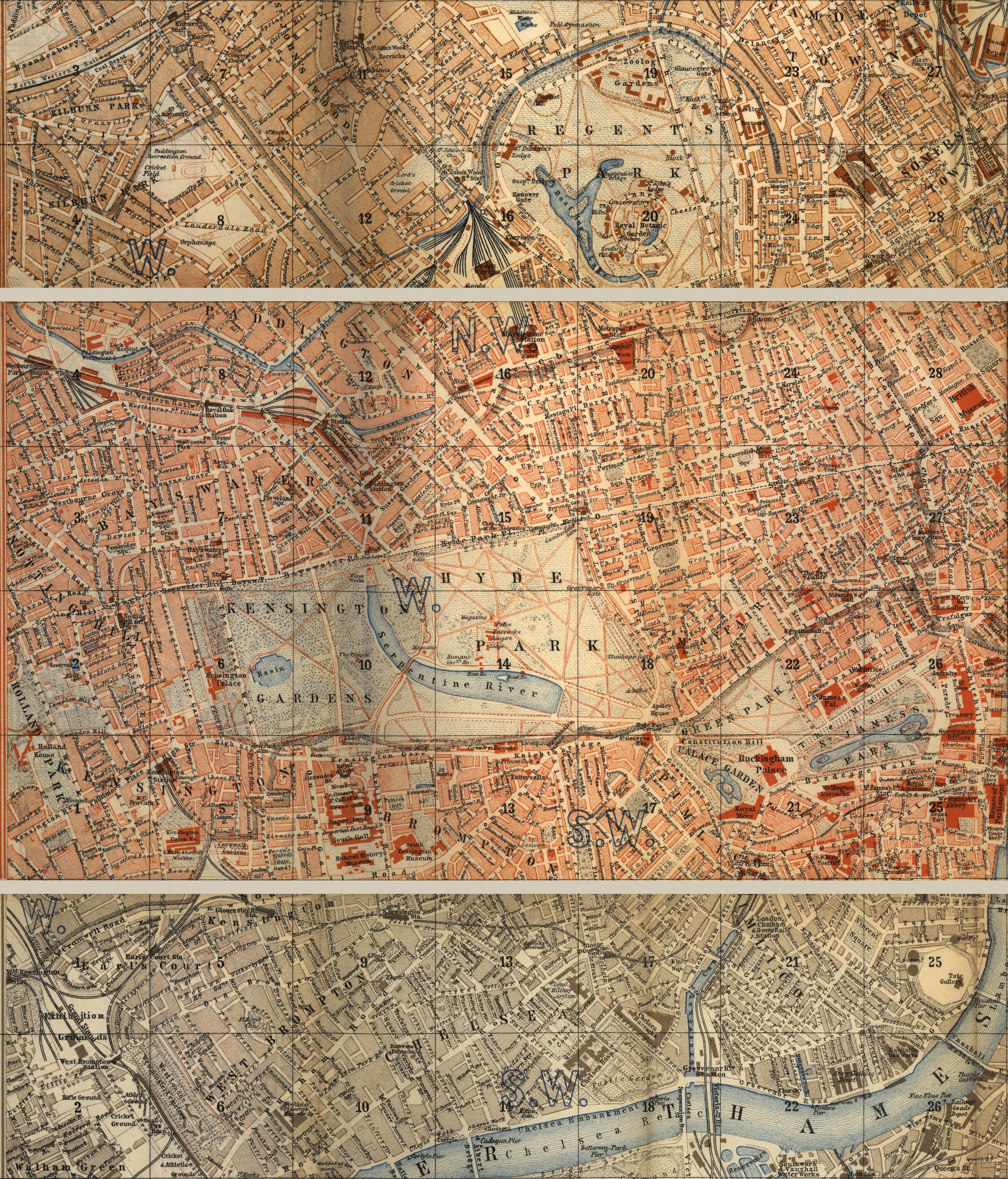
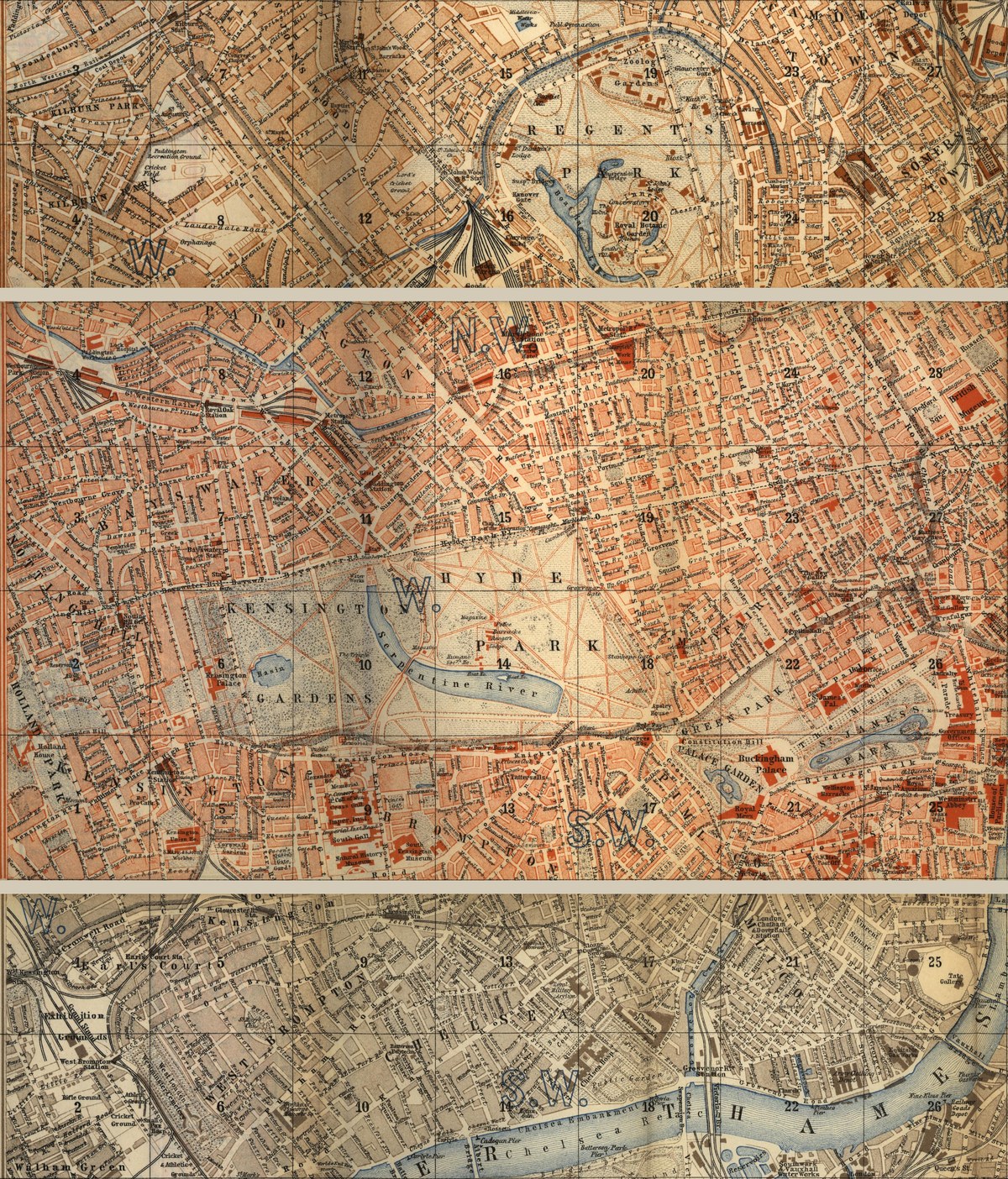
Plan of London, 1896, in three bands: St John’s Wood and Regent’s Park above, Hyde Park and Kensington in the middle, Chelsea and the Thames below
  1. Sheet II
London and its Environs. Karl Baedeker, 10th edn (Leipsic, 1896); large plan of London, 1:21,200, in three sections. The three sections are laid one above another, with a strip of paper between them: the lower part of the brown section at the top, the red in the middle, the upper part of the grey below. Internet Archive, 01664173.5382.emory.edu, public domain. The sheet at full size

The large Map of London, on the scale of 1 : 21,200, is divided into three sections, of which the uppermost is coloured brown, the central red, and the lowest gray.

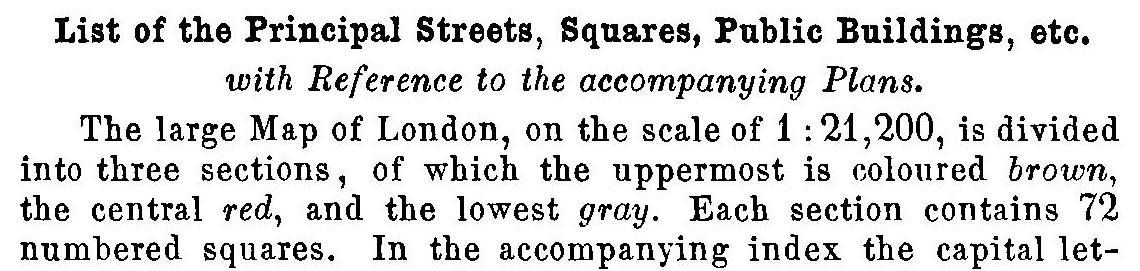
Baedeker, before the list of streets · London and its Environs, 1896, List of the Principal Streets

The first page of the list of streets in Baedeker’s guide of 1896
As printed: K. Baedeker, London and its Environs, 10th edn (Leipsic, 1896), List of the Principal Streets, Squares, Public Buildings, etc.

1891

A studio in Chelsea CHELSEA

Marked: the district, from the lettering on the plan; the studio is neither named nor marked. The place is from the essay in the Christie’s catalogue (2016): ‘Following an extensive tour of Northern Italy, Germany, Holland and Belgium, Draper returned to London in 1891, rented a studio in Chelsea and began work on The Spirit of the Fountain’.

1892–1898

9 Pembroke Studios, Kensington Pembrᵉ G

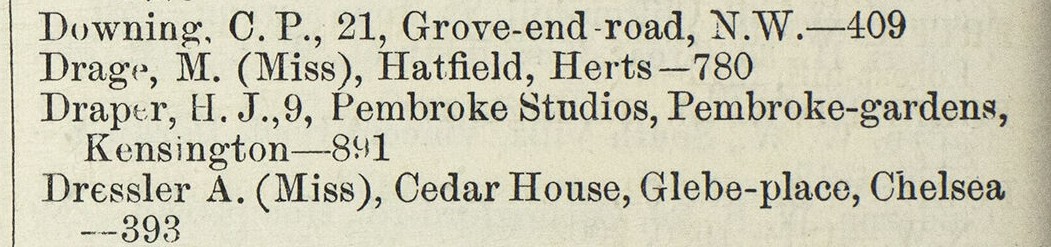
Marked: Pembroke Gardens, from the lettering on the plan, which the edge of the section cuts short; the studios are not marked. The address is printed in the Academy’s catalogue of 1892, beside his one work that year, no. 891. Baldry, on the page quoted below, writes that he ‘took a studio at Rome for the winter of 1891–2, and painted there a picture which appeared in the 1892 Academy’.

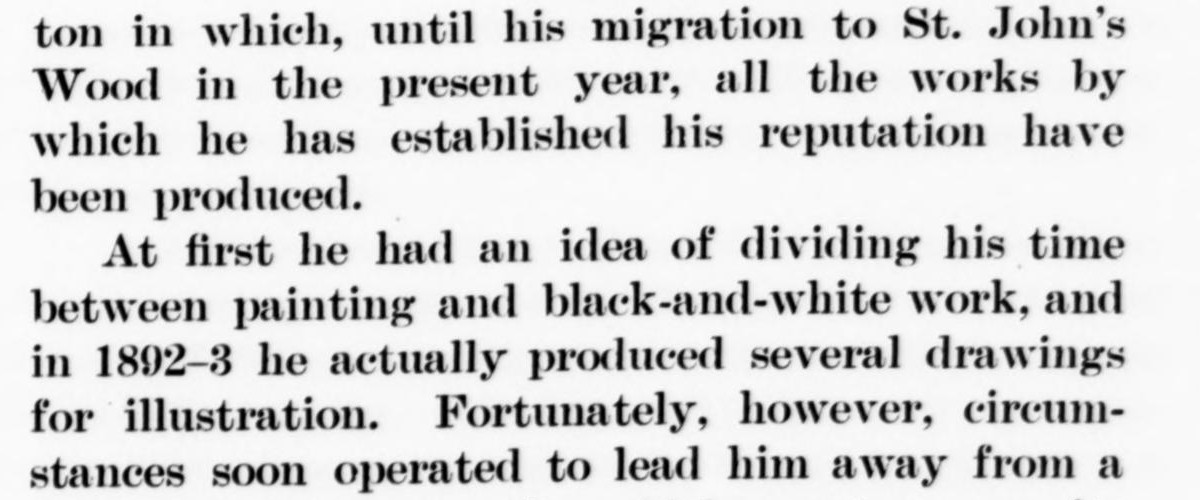
Baldry, writing in 1898, says that all the works by which Draper had made his name were painted in this studio, until his move to St John’s Wood that year (below); which of the works in this exhibition were among them, the sources do not say.

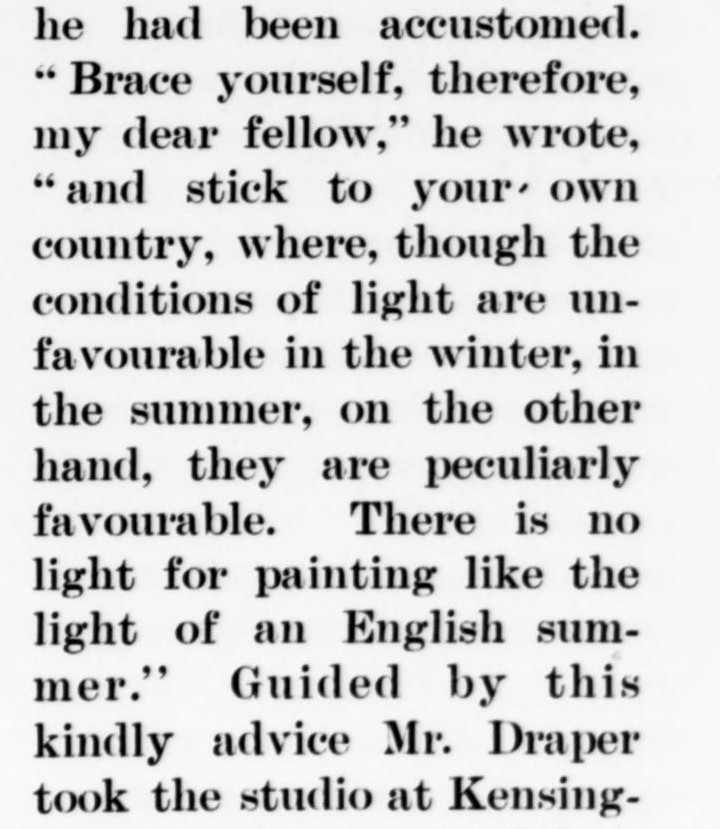
“Brace yourself, therefore, my dear fellow,” he wrote, “and stick to your own country, where, though the conditions of light are unfavourable in the winter, in the summer, on the other hand, they are peculiarly favourable. There is no light for painting like the light of an English summer.” Guided by this kindly advice Mr. Draper took the studio at Kensington in which, until his migration to St. John’s Wood in the present year, all the works by which he has established his reputation have been produced. At first he had an idea of dividing his time between painting and black-and-white work, and in 1892–3 he actually produced several drawings for illustration.

A. L. Baldry, on Lord Leighton’s answer to his question whether to settle in Italy · The Magazine of Art, December 1898, p. 51

Page 51 of The Magazine of Art: Lord Leighton’s letter
The same page: the studio at Kensington
As printed: A. L. Baldry, ‘Our Rising Artists: Mr. Herbert J. Draper’, The Magazine of Art, vol. 23 (1899), p. 51

Draper, H. J., 9, Pembroke Studios, Pembroke-gardens, Kensington—891

Catalogue of the exhibition, 1892, list of exhibitors · The Exhibition of the Royal Academy of Arts, 1892, p. 68

Page 68 of the Academy’s catalogue of 1892
As printed: The Exhibition of the Royal Academy of Arts, 1892, p. 68. Scan: Paul Mellon Centre, CC BY-NC 4.0.

From 1898

15 Abbey Road, St John’s Wood Abbey Road

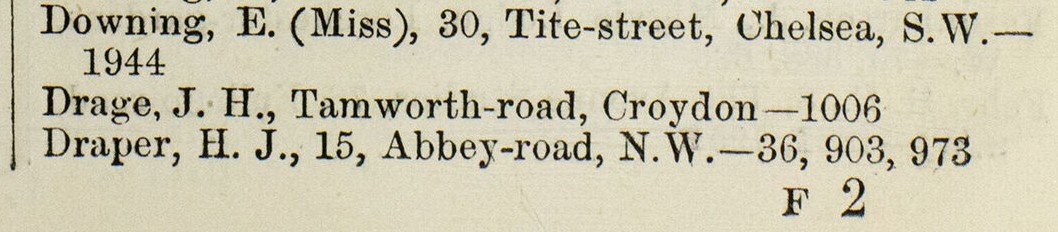
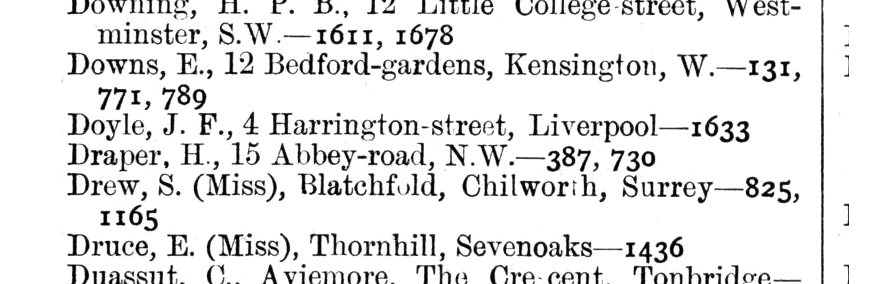
Marked: the street, from the lettering on the plan; the house is not marked. The address is printed in the Academy’s catalogues of 1898 and 1912 (below).

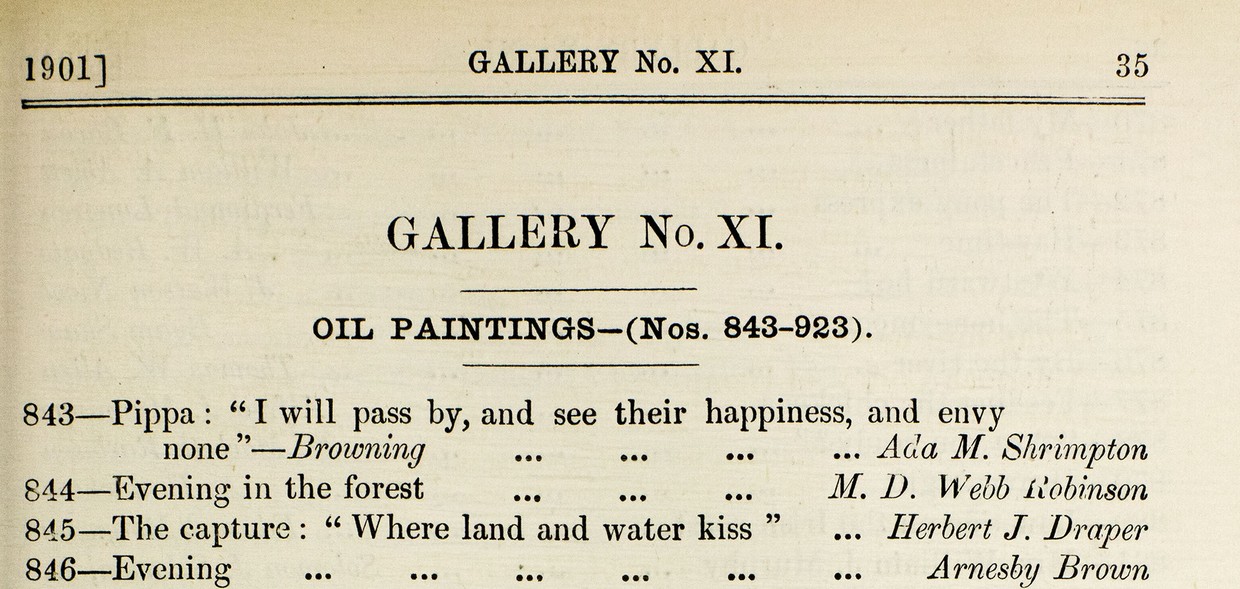
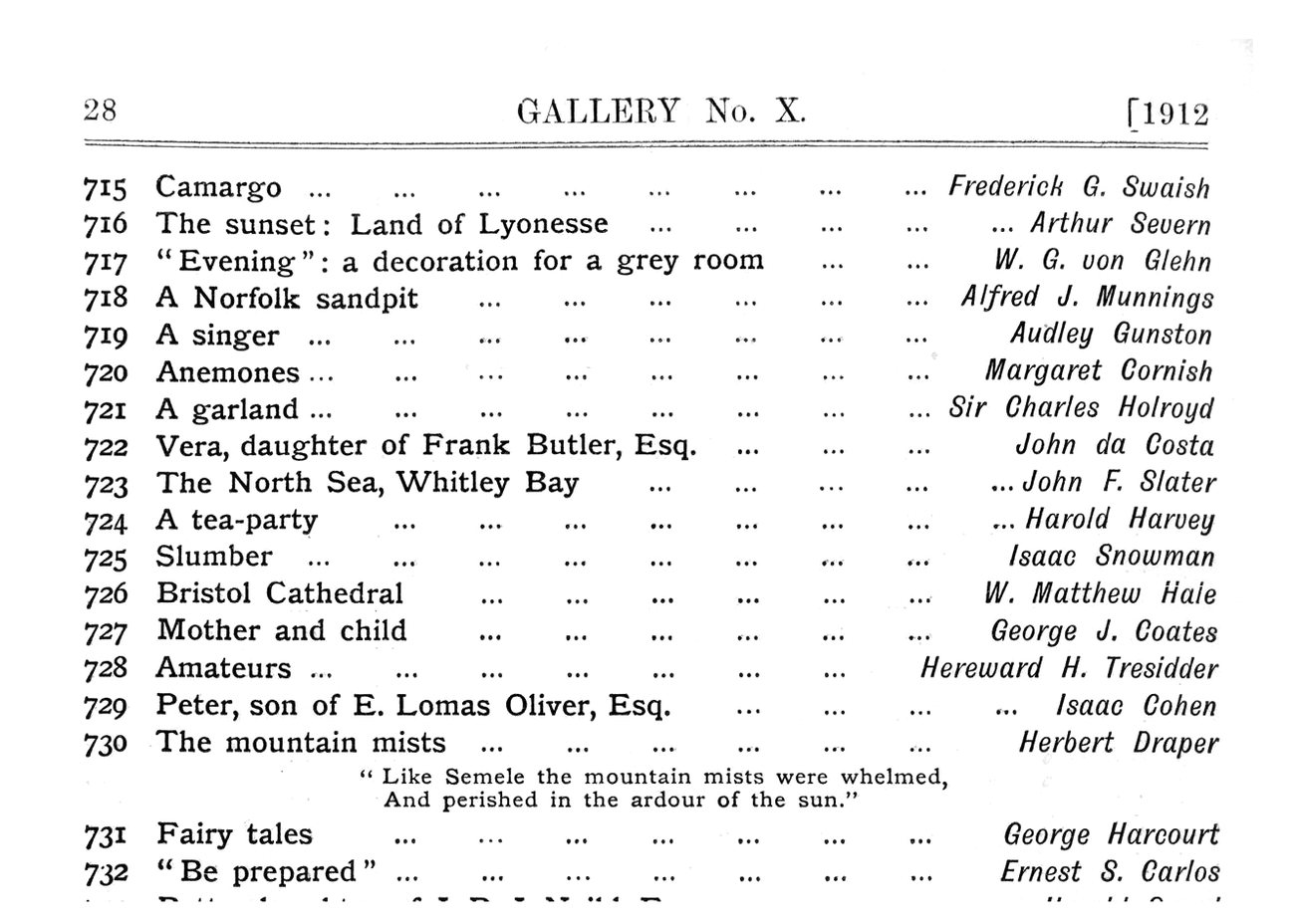
No. 903 of 1898 is The Lament for Icarus, and no. 730 of 1912 The Mountain Mists: both hung in Gallery No. X (Sheet III).

Draper, H. J., 15, Abbey-road, N.W.—36, 903, 973

Catalogue of the exhibition, 1898, list of exhibitors · The Exhibition of the Royal Academy of Arts, 1898, p. 67

Page 67 of the Academy’s catalogue of 1898
As printed: The Exhibition of the Royal Academy of Arts, 1898, p. 67. Scan: Paul Mellon Centre, CC BY-NC 4.0.

Draper, H., 15 Abbey-road, N.W.—387, 730

Catalogue of the exhibition, 1912, list of exhibitors · The Exhibition of the Royal Academy of Arts, 1912, p. 67

Page 67 of the Academy’s catalogue of 1912
As printed: The Exhibition of the Royal Academy of Arts, 1912, p. 67. Scan: Paul Mellon Centre, CC BY-NC 4.0.

Sheet II · 1898–1919

The West End

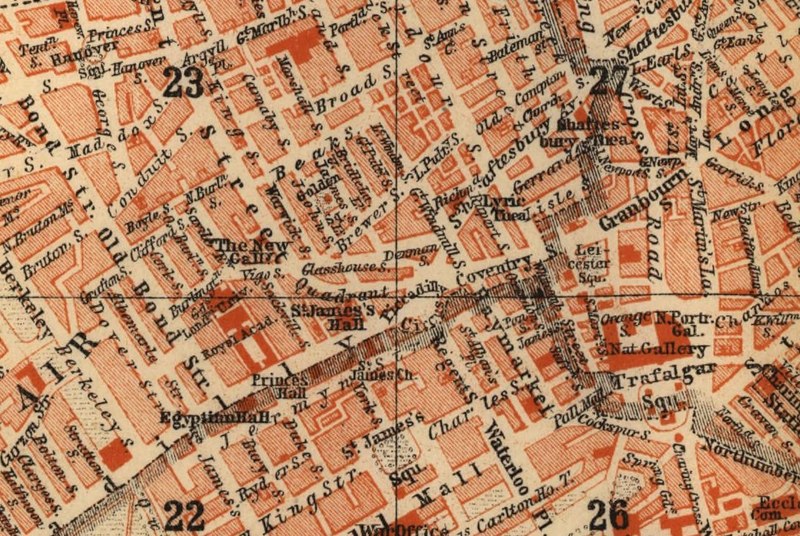
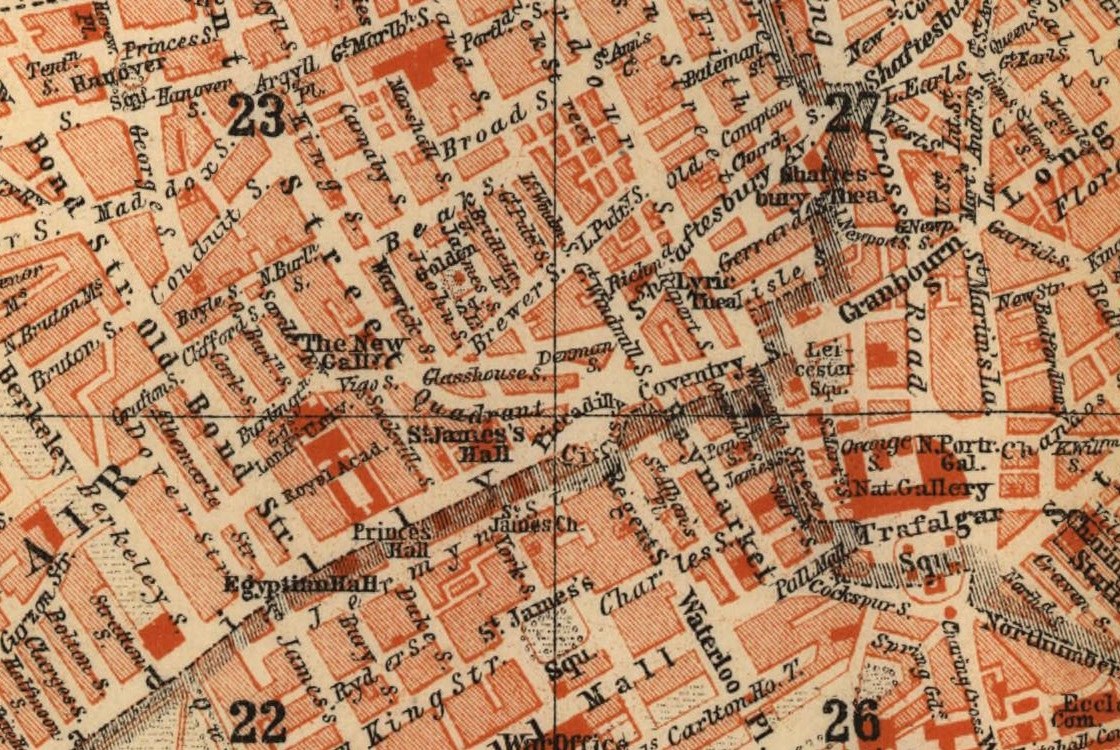
Plan of the West End, 1896: Bond Street, Regent Street and Piccadilly, Soho, Leicester Square and Trafalgar Square
  1. Sheet III
London and its Environs. Karl Baedeker, 10th edn (Leipsic, 1896); large plan of London, 1:21,200, in three sections. A closer cut of the red section, from Bond Street to Trafalgar Square. Internet Archive, 01664173.5382.emory.edu, public domain. The sheet at full size

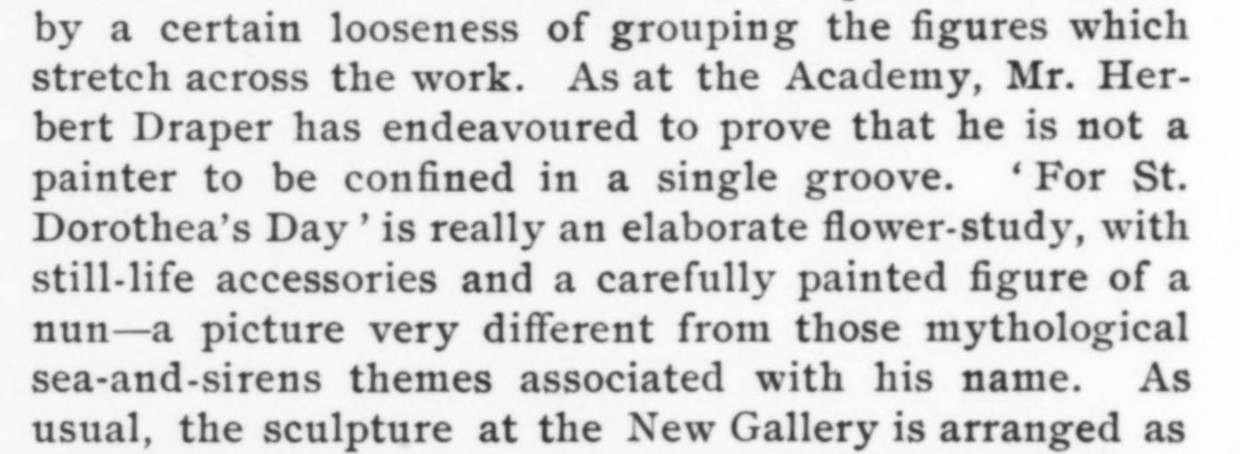
Weary with his patient wanderings through the Academy, the amiable pilgrim of art turns to the New Gallery, where the pictures are fewer and where there is no such Alpine climbing for the eye as at Burlington House.

The New Gallery’s summer exhibition, 1899 · The Art Journal, 1899, p. 185

Page 185 of The Art Journal, 1899: the opening of the notice
The same page: the end of the sentence
As printed: ‘The New Gallery Summer Exhibition, 1899’, The Art Journal, 1899, p. 185

The Royal Academy · summer exhibitions, 1898–1919

Burlington House, Piccadilly Royal Acad.

Marked: the building, from the lettering on the plan. Seven works of the exhibition were shown here; the rooms where they hung are on Sheet III.

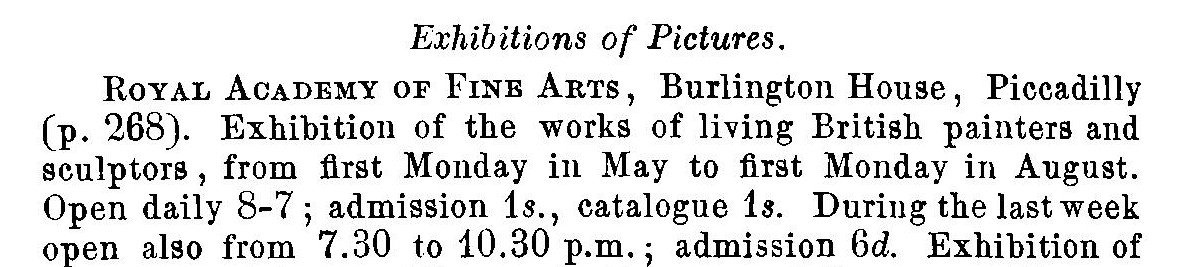
Royal Academy of Fine Arts, Burlington House, Piccadilly (p. 268). Exhibition of the works of living British painters and sculptors, from first Monday in May to first Monday in August. Open daily 8–7; admission 1s., catalogue 1s.

Baedeker, ‘Exhibitions of Pictures’ · London and its Environs, 1896, p. 68

Page 68 of Baedeker’s guide of 1896: the Royal Academy
As printed: K. Baedeker, London and its Environs, 10th edn (Leipsic, 1896), p. 68
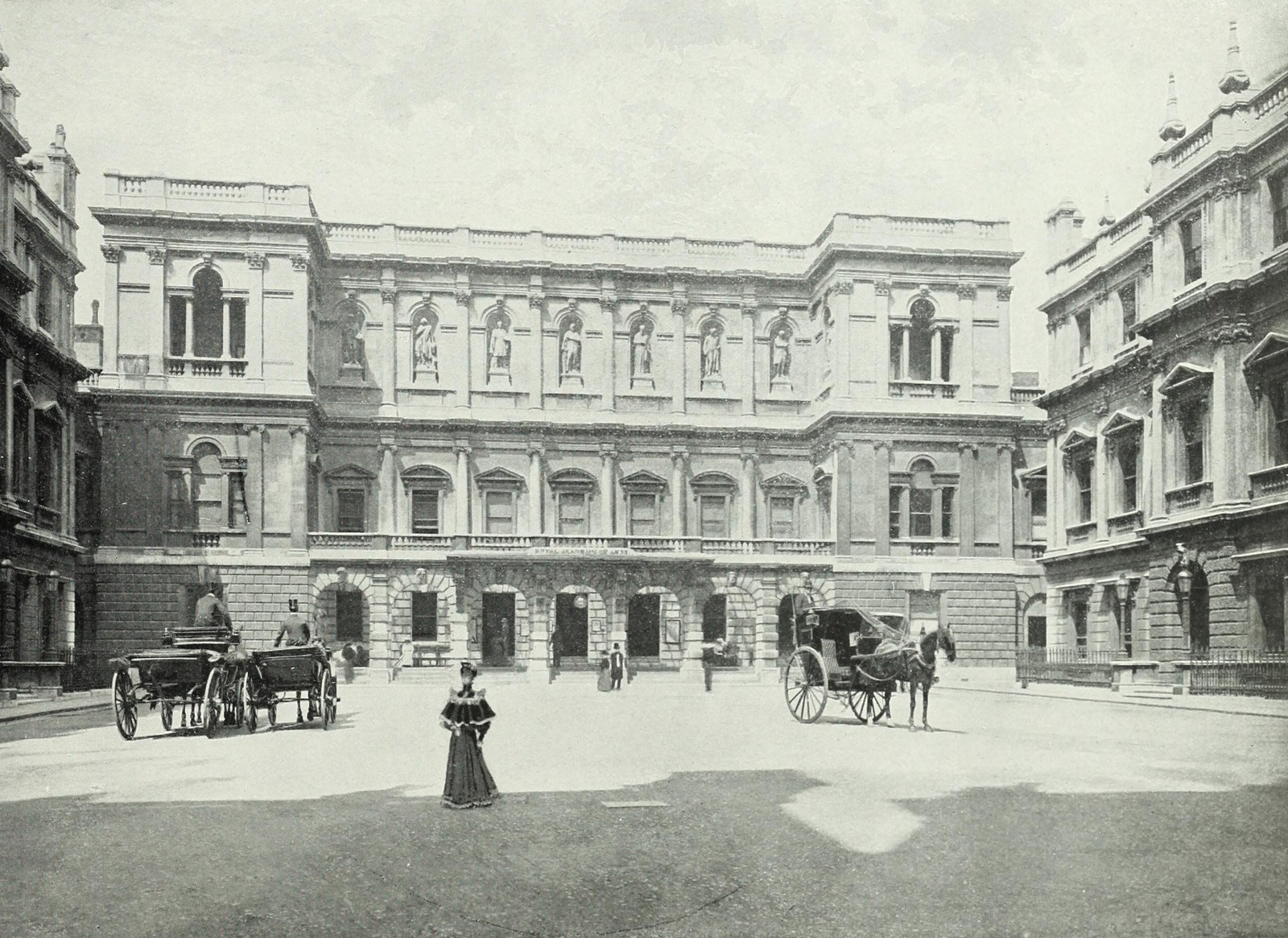
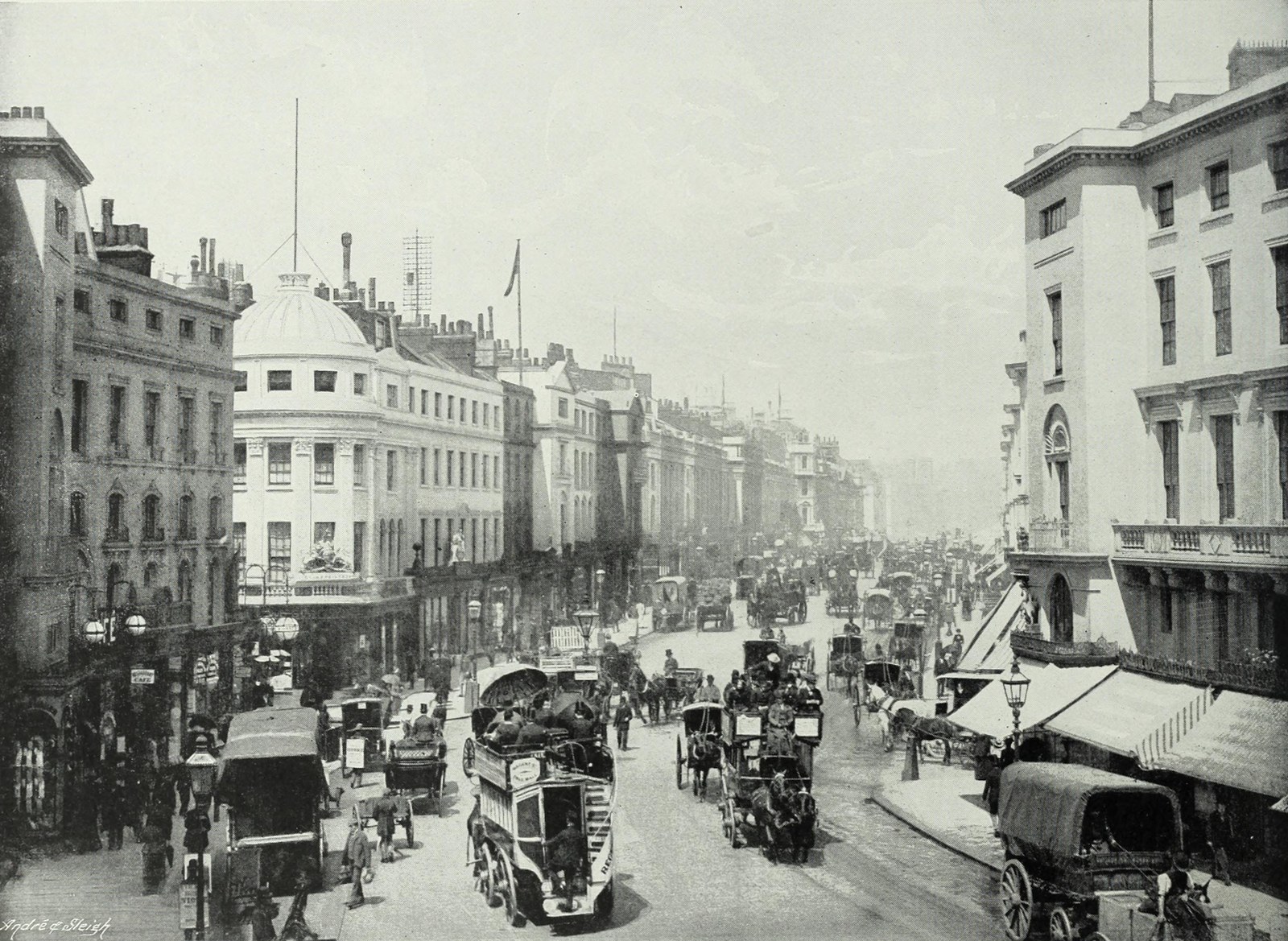
The courtyard of Burlington House: the façade with statues in niches, cabs, and a woman crossing in the foreground
The Royal Academy. … Previously the annual exhibitions of the Academy had been held in the National Gallery, an arrangement attended with much inconvenience owing to the insufficiency of space.From Photo by Cassell & Co., Lim.; The Queen’s London (London: Cassell, 1897), p. 401. Internet Archive, queenslondon01unse, public domain.

Exhibitions of his drawings and studies, 1905 and 1913

The Leicester Galleries, Leicester Square Leicester Squ.

Marked: the square, from the lettering on the plan; the galleries are not marked. Their address is in Baedeker’s guide of 1911 (below); the exhibitions are from the holders’ records.

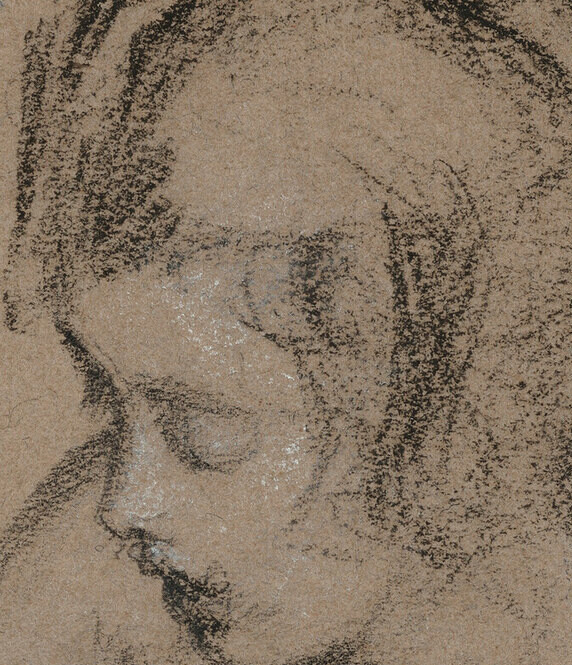
Calypso
4 Calypso, before 1905‘Drawings and Studies by Herbert Draper, January 1905, no. 6’ — Sotheby’s, 2024
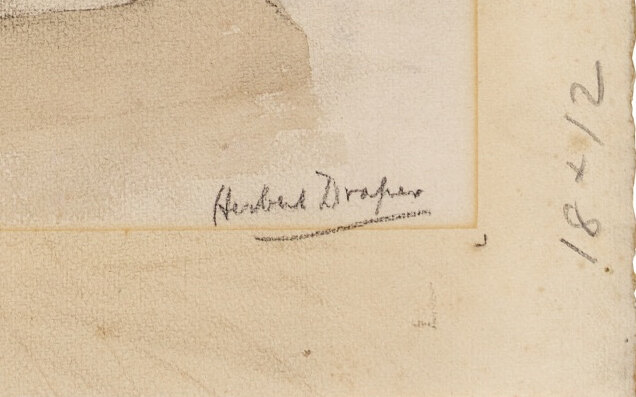
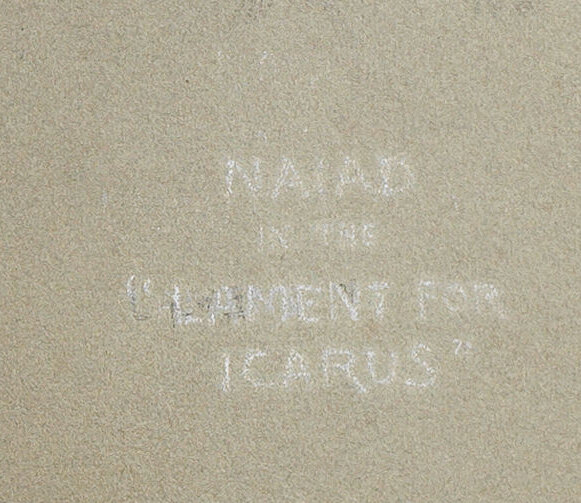
Naiad in the “Lament for Icarus”
2 Naiad in the “Lament for Icarus”, c.1898‘The Leicester Gallery, 1905, no. 60’ — Bonhams, 2016
Study for ‘The Kelpie’
5 Study for ‘The Kelpie’, c.1913‘Drawings and Studies for Pictures by Herbert Draper, 1913, no. 44’, as a study for a bather — Sotheby’s, 2012

… Leicester Galleries, 20 Green St., Leicester Square, etc. Usual charge 1s.

Baedeker, on the exhibitions of the dealers · London and its Environs, 1911, p. 39

Page 39 of Baedeker’s guide of 1911
As printed: K. Baedeker, London and its Environs, 16th edn (Leipzig, 1911), p. 39
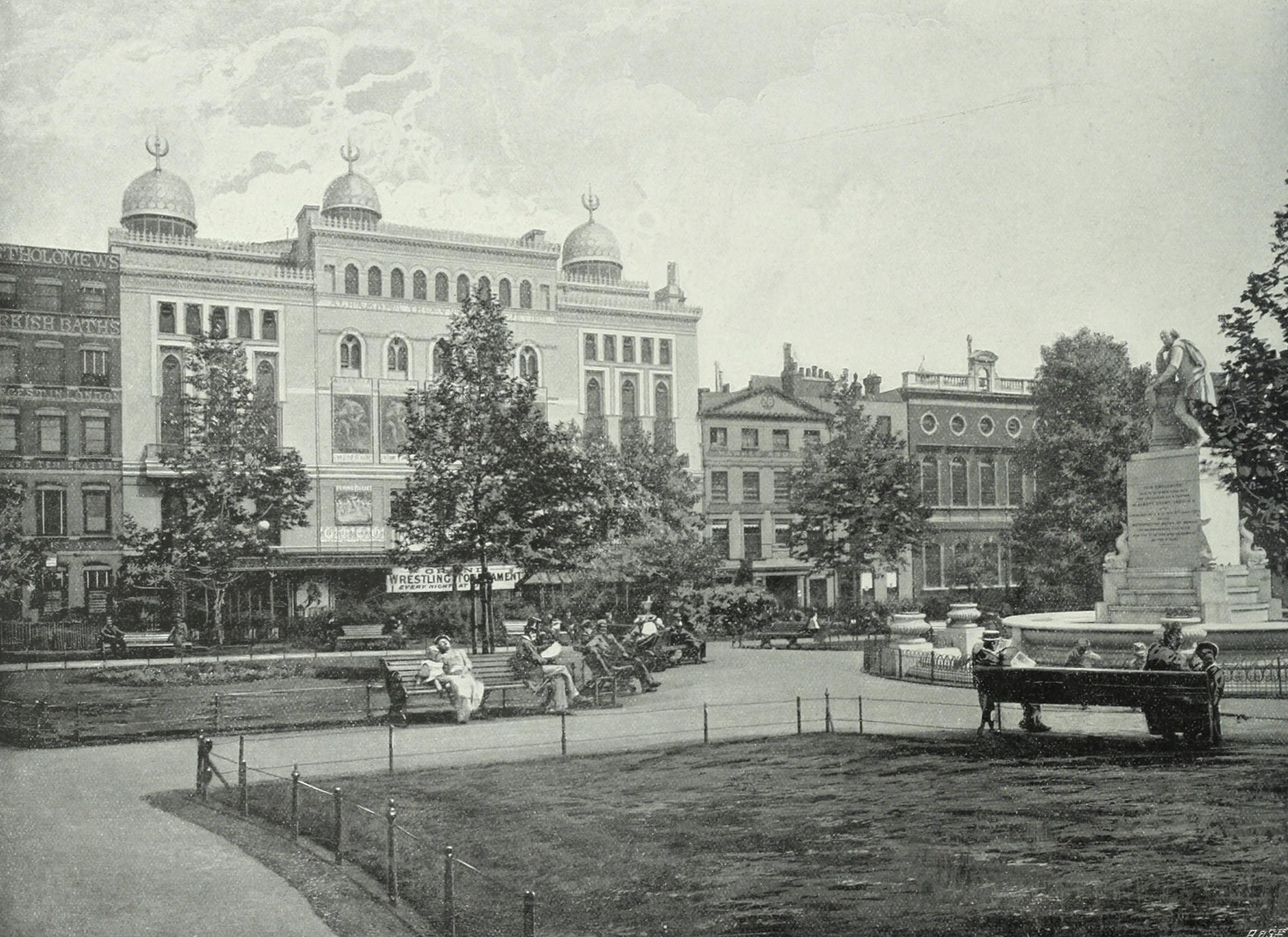
Leicester Square: the garden with benches, the statue of Shakespeare on the right, the domed Alhambra beyond
Leicester Square. … The building on the east side is the Alhambra Theatre of Varieties.From Photo by Cassell & Co., Lim.; The Queen’s London (London: Cassell, 1897), p. 264. Internet Archive, queenslondon01unse, public domain.

Sheet III · 1898–1919

The rooms of the Academy

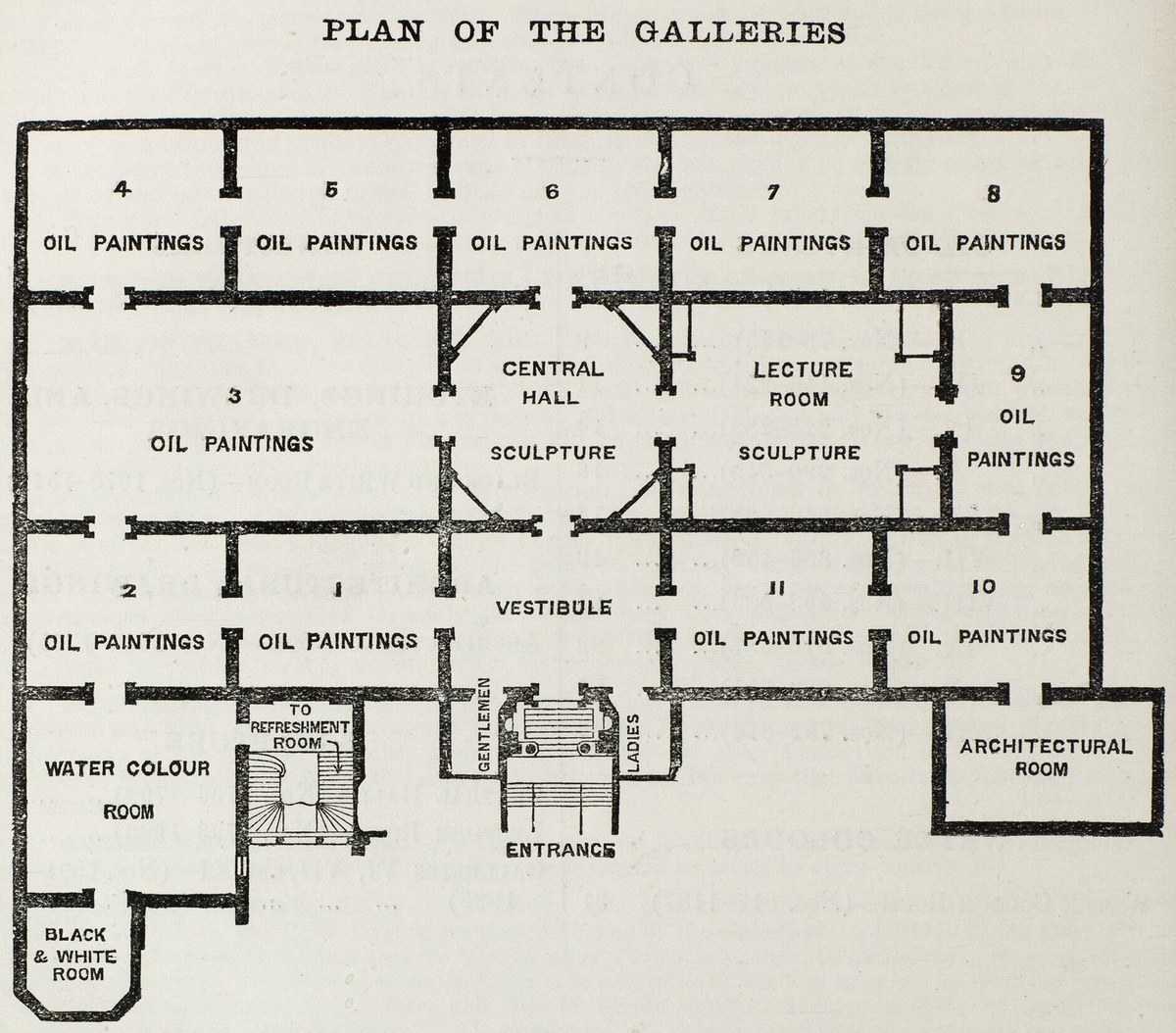
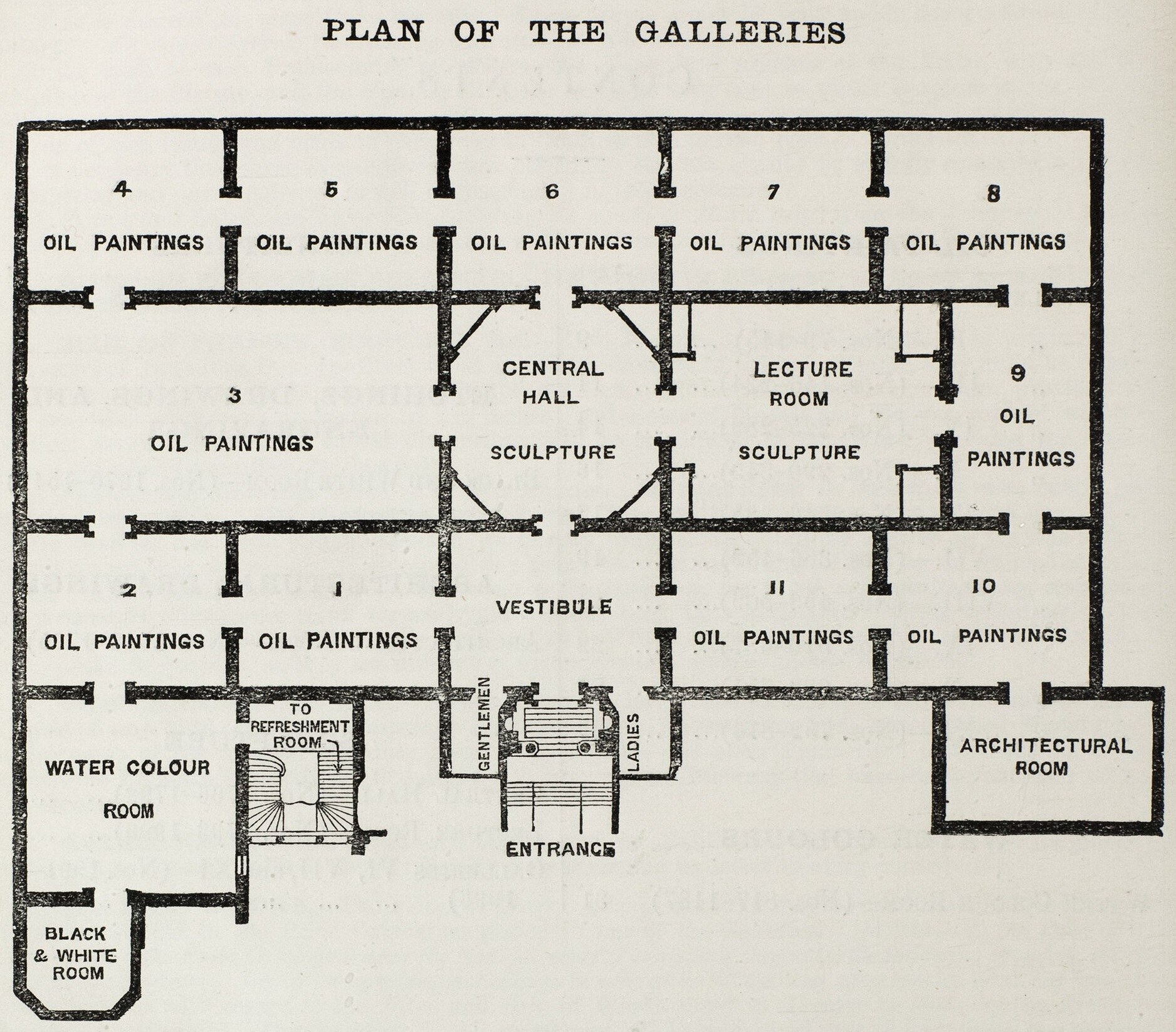
Plan of the galleries of the Royal Academy, 1912: rooms 1 to 11 of oil paintings around the Central Hall and the Lecture Room; the Water Colour, Black & White and Architectural Rooms
The Exhibition of the Royal Academy of Arts, 1912. The catalogue: ‘Plan of the Galleries’. The plan numbers the rooms 1–11; the catalogue calls them ‘Gallery No. I’ to ‘Gallery No. XI’. The plans of 1898 and 1919 number them in the same way. Paul Mellon Centre, CC BY-NC 4.0. The sheet at full size

1902

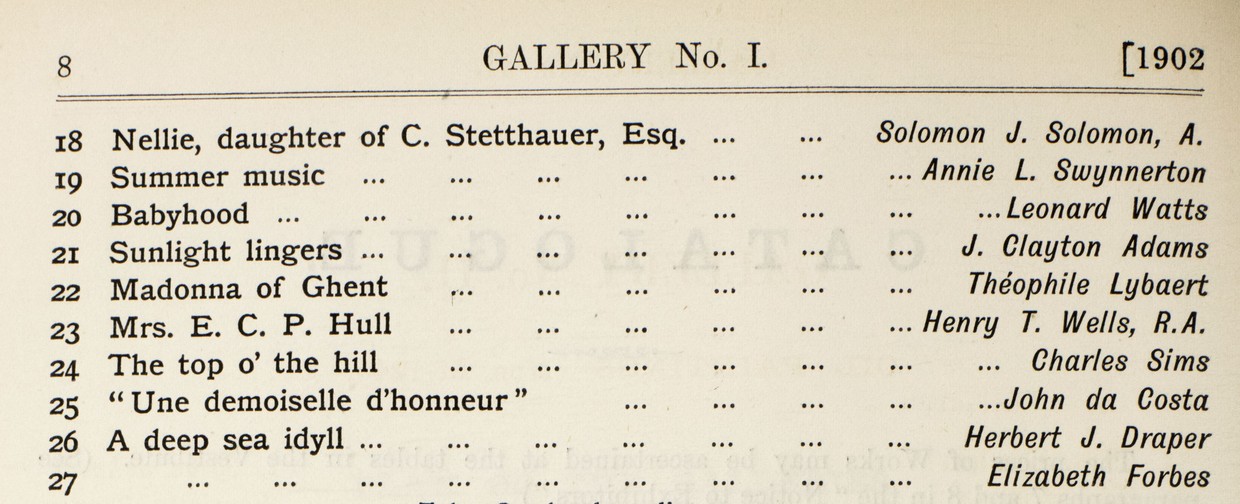
Gallery No. I 1

Marked: room 1 on the plan; the catalogue of 1902 places no. 26 in ‘Gallery No. I’.

Gallery No. I. — … — 26 A deep sea idyll … Herbert J. Draper

Catalogue of the exhibition, 1902 · The Exhibition of the Royal Academy of Arts, 1902, p. 8

Page 8 of the Academy’s catalogue of 1902
As printed: The Exhibition of the Royal Academy of Arts, 1902, p. 8. Scan: Paul Mellon Centre, CC BY-NC 4.0.

1909

Gallery No. IV 4

Marked: room 4 on the plan; the catalogue of 1909 places no. 206 in ‘Gallery No. IV’.

Gallery No. IV. — … — 206 Ulysses and the Sirens … Herbert Draper

Catalogue of the exhibition, 1909 · The Exhibition of the Royal Academy of Arts, 1909, p. 15

Page 15 of the Academy’s catalogue of 1909
The same page: no. 206
As printed: The Exhibition of the Royal Academy of Arts, 1909, p. 15. Scan: Paul Mellon Centre, CC BY-NC 4.0.

1918

Gallery No. VI 6

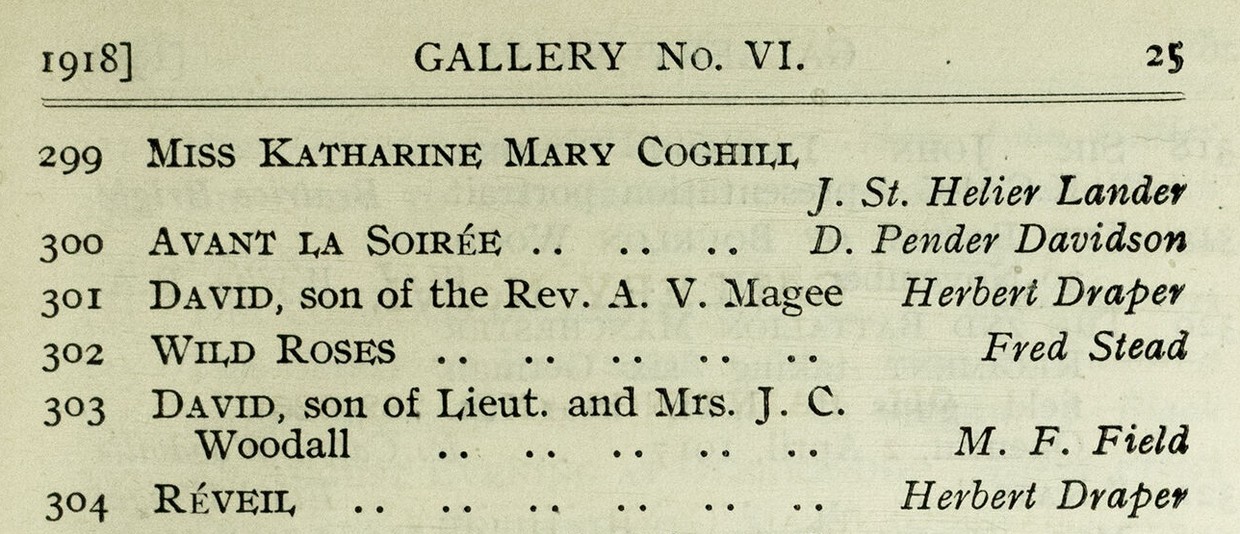
Marked: room 6 on the plan; the catalogue of 1918 places no. 304 in ‘Gallery No. VI’.

Réveil
15 Réveil, 1918

Gallery No. VI. — … — 304 Réveil … Herbert Draper

Catalogue of the exhibition, 1918 · The Exhibition of the Royal Academy of Arts, 1918, p. 25

Page 25 of the Academy’s catalogue of 1918
As printed: The Exhibition of the Royal Academy of Arts, 1918, p. 25. Scan: Paul Mellon Centre, CC BY-NC 4.0.

1898, 1912 and 1919

Gallery No. X 10

Marked: room 10 on the plan, beside the Architectural Room; the catalogues of 1898, 1912 and 1919 place nos. 903, 730 and 588 in ‘Gallery No. X’.

The Lament for Icarus
13 The Lament for Icarus, 18981898, no. 903
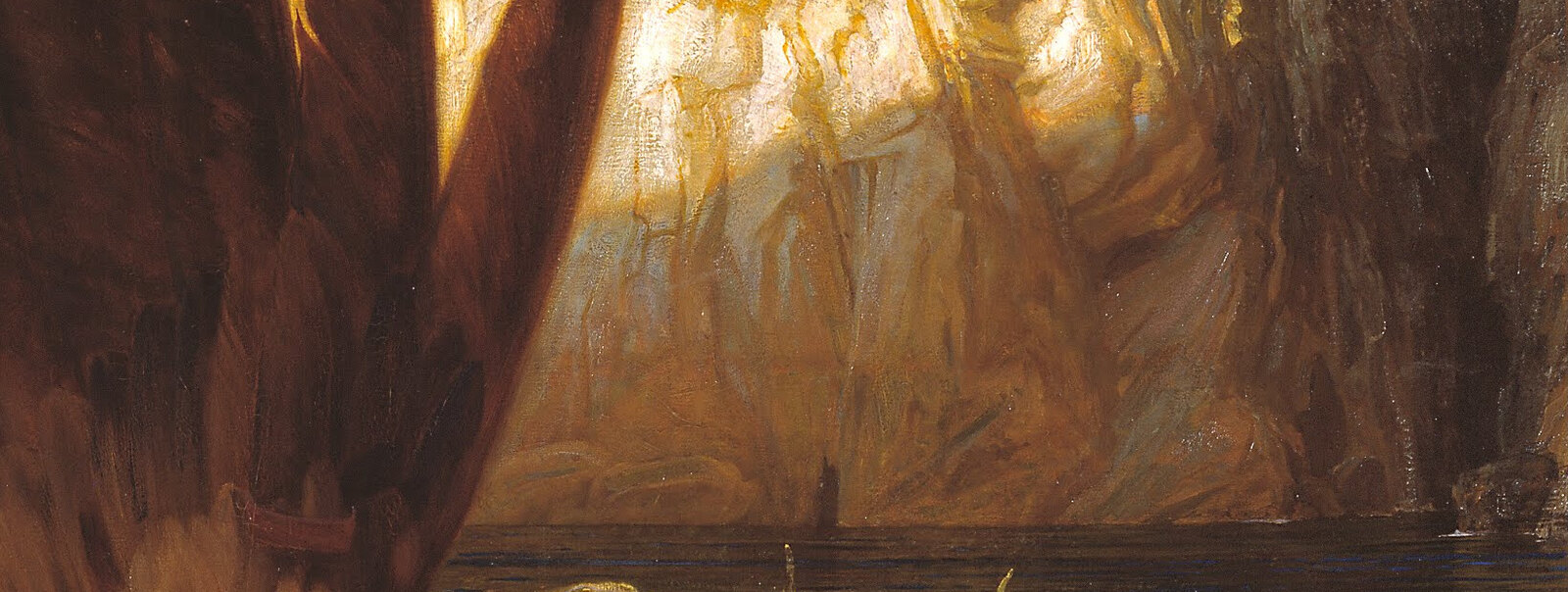
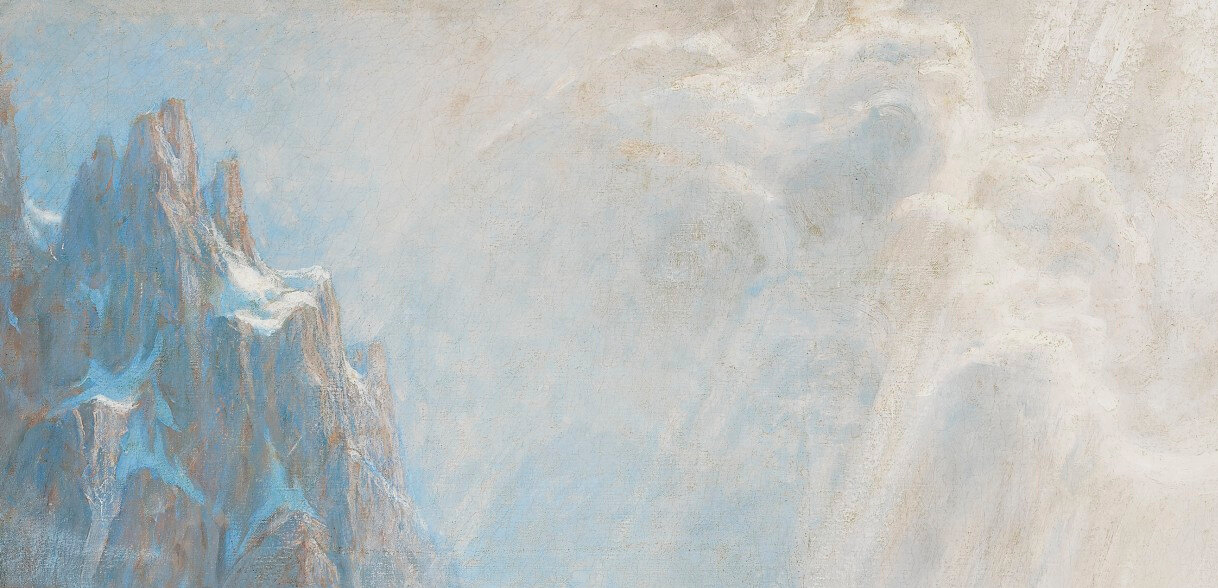
The Mountain Mists
14 The Mountain Mists, 19121912, no. 730
Portrait of Miss Barbara de Selincourt
19 Portrait of Miss Barbara de Selincourt, 19191919, no. 588

The Mountain Mists is treated at length in the dossier of the principal work.

Gallery No. X. — … — 903—The lament for Icarus. Purchased by the President and Council of the Royal Academy under the terms of the Chantrey Bequest … Herbert J. Draper

Catalogue of the exhibition, 1898 · The Exhibition of the Royal Academy of Arts, 1898, p. 33

Page 33 of the Academy’s catalogue of 1898
The same page: no. 903
As printed: The Exhibition of the Royal Academy of Arts, 1898, p. 33. Scan: Paul Mellon Centre, CC BY-NC 4.0.

Gallery No. X. — … — 730 The mountain mists … Herbert Draper
“Like Semele the mountain mists were whelmed,
And perished in the ardour of the sun.”

Catalogue of the exhibition, 1912 · The Exhibition of the Royal Academy of Arts, 1912, p. 28

Page 28 of the Academy’s catalogue of 1912
As printed: The Exhibition of the Royal Academy of Arts, 1912, p. 28. Scan: Paul Mellon Centre, CC BY-NC 4.0.

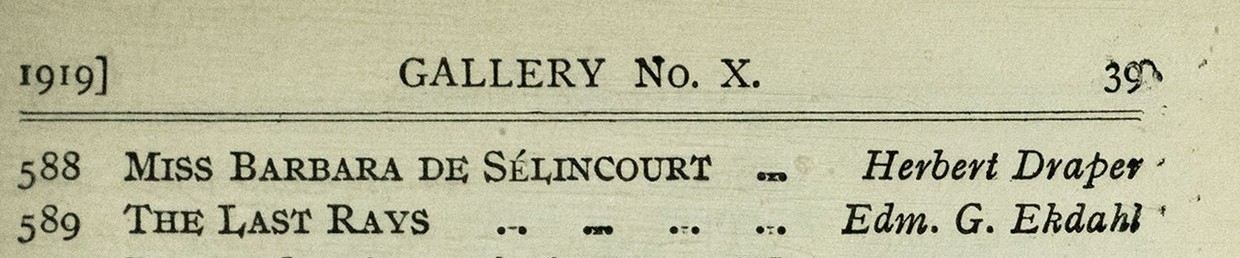
Gallery No. X. — 588 Miss Barbara de Sélincourt … Herbert Draper

Catalogue of the exhibition, 1919 · The Exhibition of the Royal Academy of Arts, 1919, p. 39

Page 39 of the Academy’s catalogue of 1919
As printed: The Exhibition of the Royal Academy of Arts, 1919, p. 39. Scan: Paul Mellon Centre, CC BY-NC 4.0.

Beyond London · Extra urbem

1898–1902

Liverpool, Leeds, Bradford

Source: the catalogue of the National Gallery of British Art of 1907 for The Lament for Icarus (below), and the records of the holders and sale catalogues for the other works.

Exhibited at the Royal Academy, the Walker Art Gallery, Liverpool, and at Leeds in 1898. Chantrey Purchase, 1898.

On The Lament for Icarus · Descriptive and Historical Catalogue of the Pictures and Sculpture in the National Gallery, British Art, 1907, p. 79

Page 79 of the catalogue of the National Gallery of British Art, 1907
As printed: Descriptive and Historical Catalogue of the Pictures and Sculpture in the National Gallery, British Art (London, 1907), p. 79
The Lament for Icarus
13 The Lament for Icarus, 1898the Walker Art Gallery, Liverpool, and Leeds, 1898
A Deep Sea Idyll
11 A Deep Sea Idyll, 1902‘Liverpool, Walker Art Gallery, Autumn Exhibition, 1902, no. 82’ — Christie’s, 2016
Portrait of Yvonne Draper, the artist’s daughter, wearing her christening gown
17 Portrait of Yvonne Draper, the artist’s daughter, wearing her christening gown, 1902‘Liverpool, Liverpool Autumn Exhibition, 1902, no. 916’ — Woolley & Wallis, 2023
For Saint Dorothea’s Day
16 For Saint Dorothea’s Day, 1899‘Bradford, 1900’ — Bonhams, 2004

1903–1963

Pietermaritzburg, the Tatham Art Gallery

Source: the record in the Christie’s catalogue (2016): ‘Loaned by the artist in 1903 to the Municipal Art Gallery (now Tatham Art Gallery), Pietermaritzburg (where known as “A Sea-Maid’s Love Story”), and purchased by public subscription for the Gallery before 1905’; it remained there until 1963, when the gallery sold it.

Neither where painted nor where shown is named in the sources · Loca ignota

  1. 1 Design for an illustration to ‘The Tame Partridge’ 1893 · Baldry writes that ‘in 1892–3 he actually produced several drawings for illustration’ — the years of the Kensington studio (Sheet I)
  2. 3 Study for Tristram and Yseult c.1901 · a picture of his of that title, Tristram and Iseult, hung at the Academy in 1901, no. 561, in Gallery No. VIII
  3. 8 Ariadne c.1905–06
  4. 9 By Summer Seas c.1912 · the sale record: ‘has never been exhibited or reproduced’
  5. 10 Sea Melodies c.1904 · the record refers to ‘the larger painting of the same name’; a Sea melodies of his hung at the Academy in 1904, no. 302, in Gallery No. IV
  6. 18 The Young Badminton Player undated
  7. 20 Study for ‘The Lament for Icarus’ c.1898 · the picture it was made for hung in Gallery No. X in 1898 (Sheet III)

Sources

The plans: K. Baedeker, London and its Environs, 10th edn (Leipsic, 1896), the large plan of London in three sections (scan of the copy at Emory University, Internet Archive), public domain; and the plan of the galleries in the Royal Academy’s catalogue of 1912 (Paul Mellon Centre, CC BY-NC 4.0). Each circle is set on the lettering as printed: the street, the district, the building, the number of the room. The addresses and the rooms are from the Academy’s catalogues of 1892–1919 (scans of the Paul Mellon Centre, CC BY-NC 4.0); the words on the places from A. L. Baldry’s article in The Magazine of Art (December 1898), The Art Journal (1899), Baedeker’s guides of 1896 and 1911, and the catalogue of the National Gallery of British Art (1907) (Internet Archive). The place where a work was painted, and where it was shown outside the Academy, are from the records of the holders and of the sale catalogues: Christie’s, Sotheby’s, Bonhams, Woolley & Wallis. The photographs of the places are from The Queen’s London (London: Cassell, 1897; scan, Duke University Libraries, Internet Archive), each with the book’s caption verbatim.

How to cite

After The Chicago Manual of Style (18th edn, 2024), in the form used in art-historical publications.

Note
“Places. Supplementary material to the exhibition What Song the Syrens Sang,” Lacrimae Rerum Gallery, LR 9, accessed 14 November 2026, https://lacrimaererum.art/draper/what-song-the-syrens-sang/loca/.
Bibliography
Lacrimae Rerum Gallery. “Places. Supplementary material to the exhibition What Song the Syrens Sang.” LR 9. Accessed 14 November 2026. https://lacrimaererum.art/draper/what-song-the-syrens-sang/loca/.